Start with the longest item
Measure serving platters, appliances stored while unused, or other bulky pieces that motivate the purchase. If nothing requires extra depth, a shallower cabinet may offer easier visibility and preserve more floor space.
Plan front and rear roles
Use the front for frequent items and the rear for a clearly defined category. Avoid a general overflow zone where unrelated objects disappear. A labeled removable bin can help if it fits the opening.
Check the door opening
Interior depth alone does not guarantee a large object can enter or exit. Include hinges, door overlap and the angle needed to turn a platter through the opening before choosing the cabinet.
Compare maintenance effort
Rehearse taking out the back item while the front contains its normal supplies. If that requires emptying several shelves, consider a shallower arrangement or drawers designed for the intended contents.
Illustrative scenario: a deep cabinet holds occasional serving bowls behind a daily plate stack. If the bowls are used every weekend, placing them in their own accessible section may be more practical than maximizing packed volume.
Continue your research.
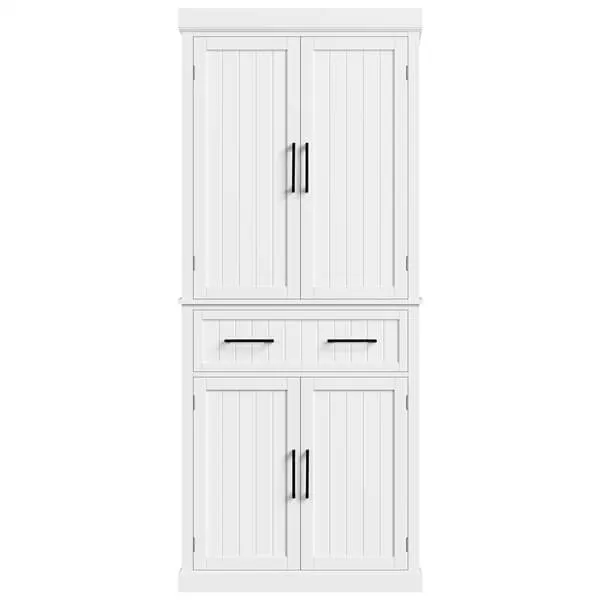
72.5″ H Kitchen Pantry Cabinet
Plan where this storage format would sit in your kitchen.
Read the existing model research →References & research notes
These references inform the decision process. Numerical examples are illustrative unless explicitly attributed; they are not specifications for the linked products. Product links are examples to investigate, not confirmation that they fit your space. Verify the exact model and its current manufacturer instructions before ordering.
Created with AI assistance and reviewed for internal consistency, source relevance and links. We have not physically tested the featured products. Affiliate disclosure.