Measure the actual assortment
Gather the bottle formats you normally buy, including larger occasional purchases. Tall necks, wide bases and carry packaging create different requirements. A shelf that accepts one standard shape may not suit your full assortment.
Check the removal motion
Try lifting a bottle from a mock shelf with its front rail represented. Consider where your hand goes and whether neighboring bottles must be moved. Standing fit and practical retrieval are separate checks.
Respect the selected cart's limits
Review shelf and overall load instructions for the exact model. Do not translate the count of bottles into an assumed safe capacity or borrow a limit from a visually similar product.
Plan replenishment space
Decide where new purchases wait while older bottles remain accessible. Leaving one modest staging area can simplify restocking; filling every inch may cause loose packages to migrate back onto the floor.
Illustrative scenario: a household keeps everyday drink bottles on one accessible shelf and larger unopened packs elsewhere. The cart becomes a convenient point of use rather than a substitute for every bulk-storage need.
Continue your research.
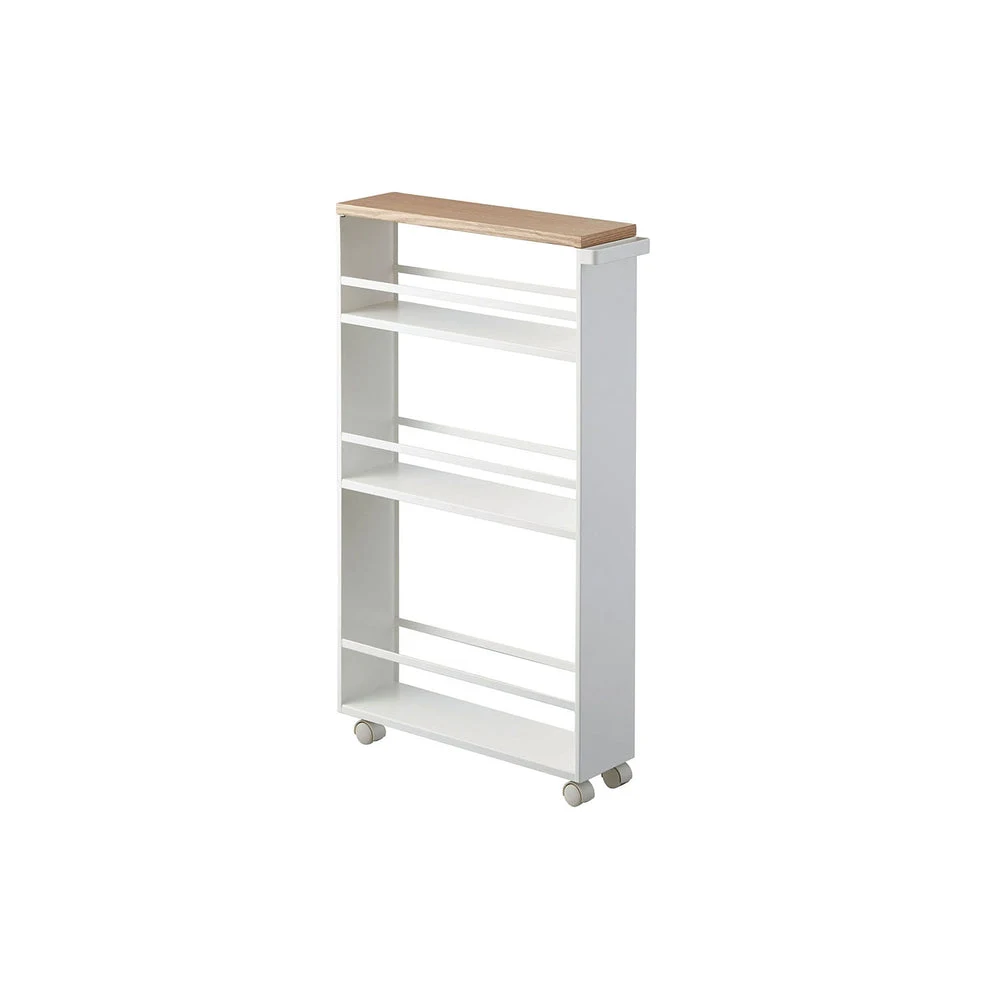
Yamazaki Tower Slim Cart
A narrow rolling format for a measured storage gap.
Read the existing model research →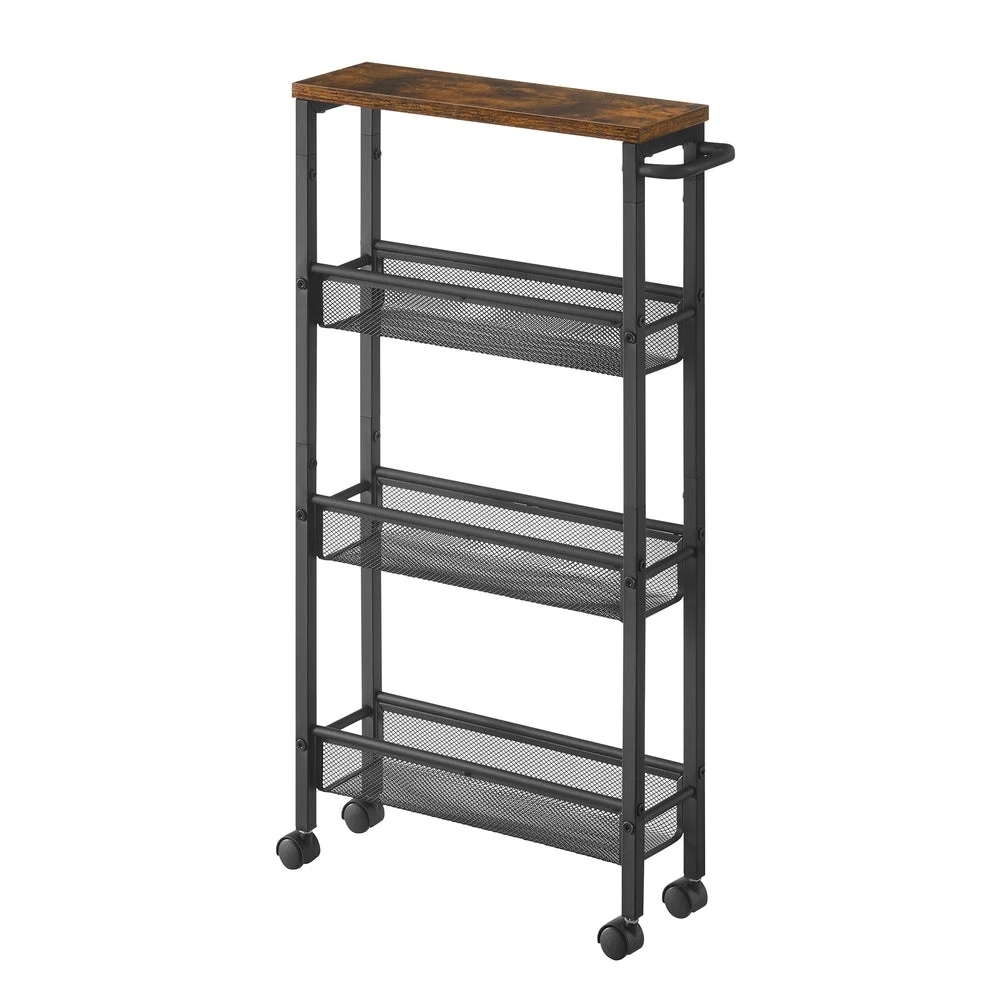
Slim Rolling Cart with Handle
Explore movable shelving for an unused kitchen gap.
Read the existing model research →References & research notes
These references inform the decision process. Numerical examples are illustrative unless explicitly attributed; they are not specifications for the linked products. Product links are examples to investigate, not confirmation that they fit your space. Verify the exact model and its current manufacturer instructions before ordering.
Created with AI assistance and reviewed for internal consistency, source relevance and links. We have not physically tested the featured products. Affiliate disclosure.