Walk through a recipe
List the tools you reach for in order, including bowls, measures and cooling equipment. This reveals which supplies need quick access and which can remain in a separate cabinet until later.
Reserve the top deliberately
If the cart is meant to provide preparation space, avoid using its top as permanent appliance storage. Check the manufacturer's intended surface use and care instructions before deciding what work belongs there.
Fit bulky pieces first
Measure the largest bowl and pan you intend to store. Shelf openings and rails can matter more than total cart volume. Small utensils can fill remaining space more easily than an oversized mixing bowl can.
Set a return sequence
Make room to put tools away after cleaning without rebuilding the entire arrangement. A baking cart should simplify the end of the task as well as the appealing moment when all ingredients are laid out.
Illustrative scenario: one lower shelf holds the mixing bowls and another holds a labeled tool bin. Keeping pans in their existing vertical cabinet leaves the cart top clear for the next baking session.
Continue your research.
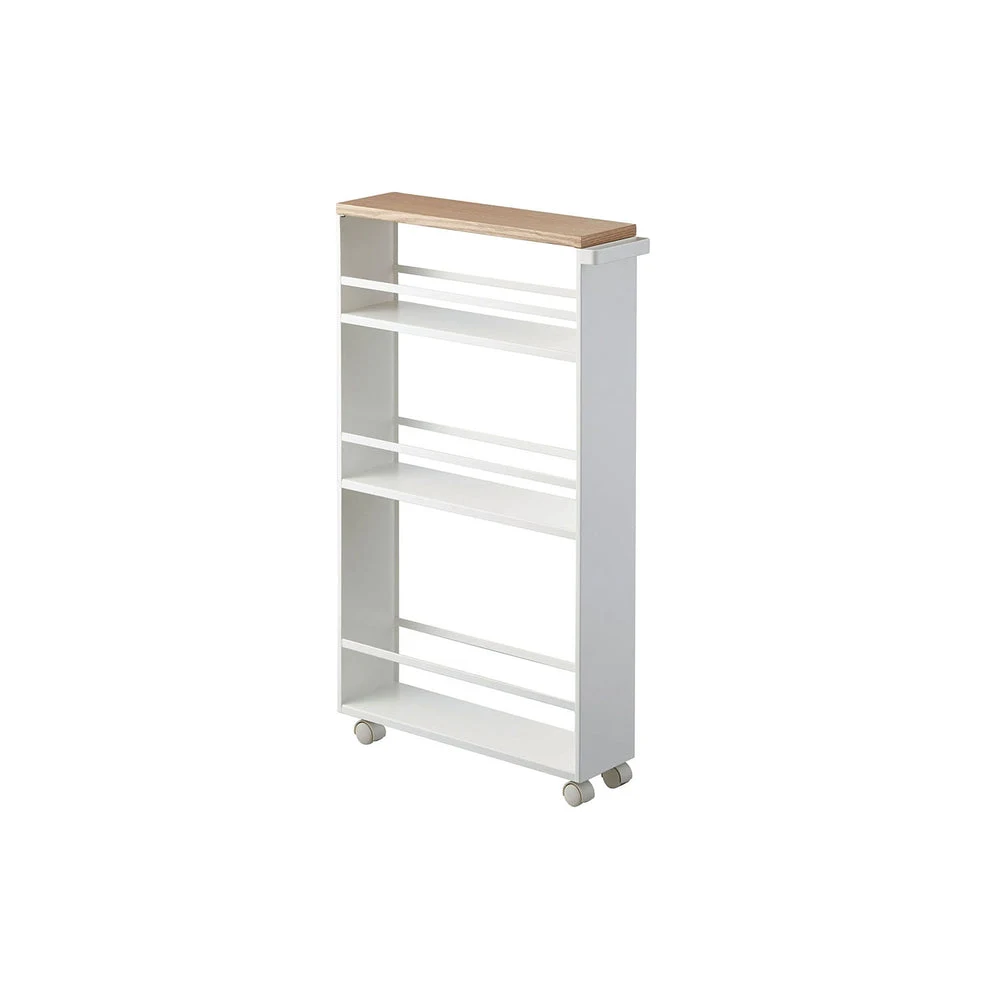
Yamazaki Tower Slim Cart
A narrow rolling format for a measured storage gap.
Read the existing model research →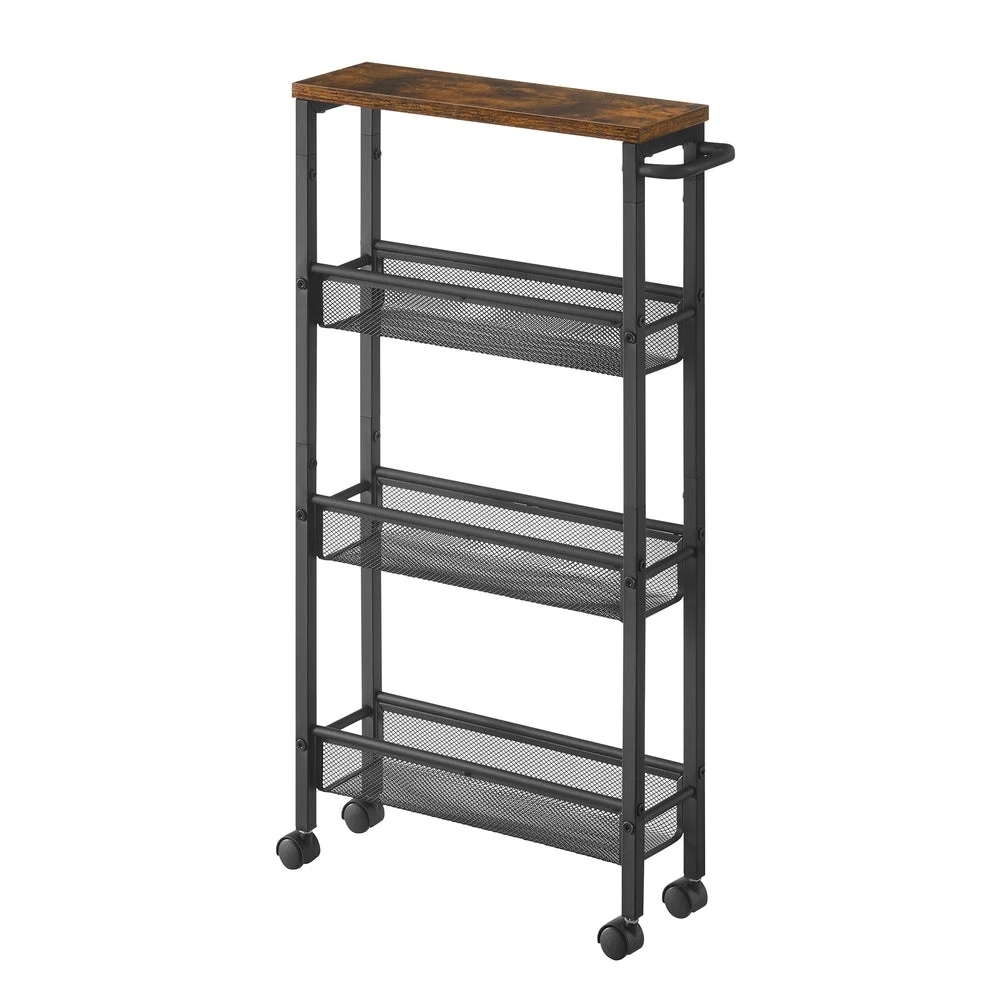
Slim Rolling Cart with Handle
Explore movable shelving for an unused kitchen gap.
Read the existing model research →References & research notes
These references inform the decision process. Numerical examples are illustrative unless explicitly attributed; they are not specifications for the linked products. Product links are examples to investigate, not confirmation that they fit your space. Verify the exact model and its current manufacturer instructions before ordering.
Created with AI assistance and reviewed for internal consistency, source relevance and links. We have not physically tested the featured products. Affiliate disclosure.