Inventory the small items
Group mugs, filters, scoops and unopened supplies by frequency. A daily setup may need only a few accessible items; storing every backup on top can consume the surface intended for preparing a drink.
Measure retrieval room
Check the openings for your tallest container and widest mug handle. Consider removing a mug without moving a row of others. A shelf's nominal capacity means little if the daily item is trapped at the rear.
Address appliance instructions
Read the appliance maker's placement, clearance and operating requirements. Do not assume a cart surface, nearby outlet or included electrical feature makes a proposed setup appropriate for operation.
Keep the refill path simple
Store replacement supplies where you can see them without dismantling the daily arrangement. If refilling requires unloading the entire cart, divide everyday contents from backstock in another accessible location.
Illustrative scenario: a cart holds mugs and filters beside the dining area while the machine remains on a suitable counter according to its instructions. The storage decision succeeds without requiring the appliance to move.
Continue your research.
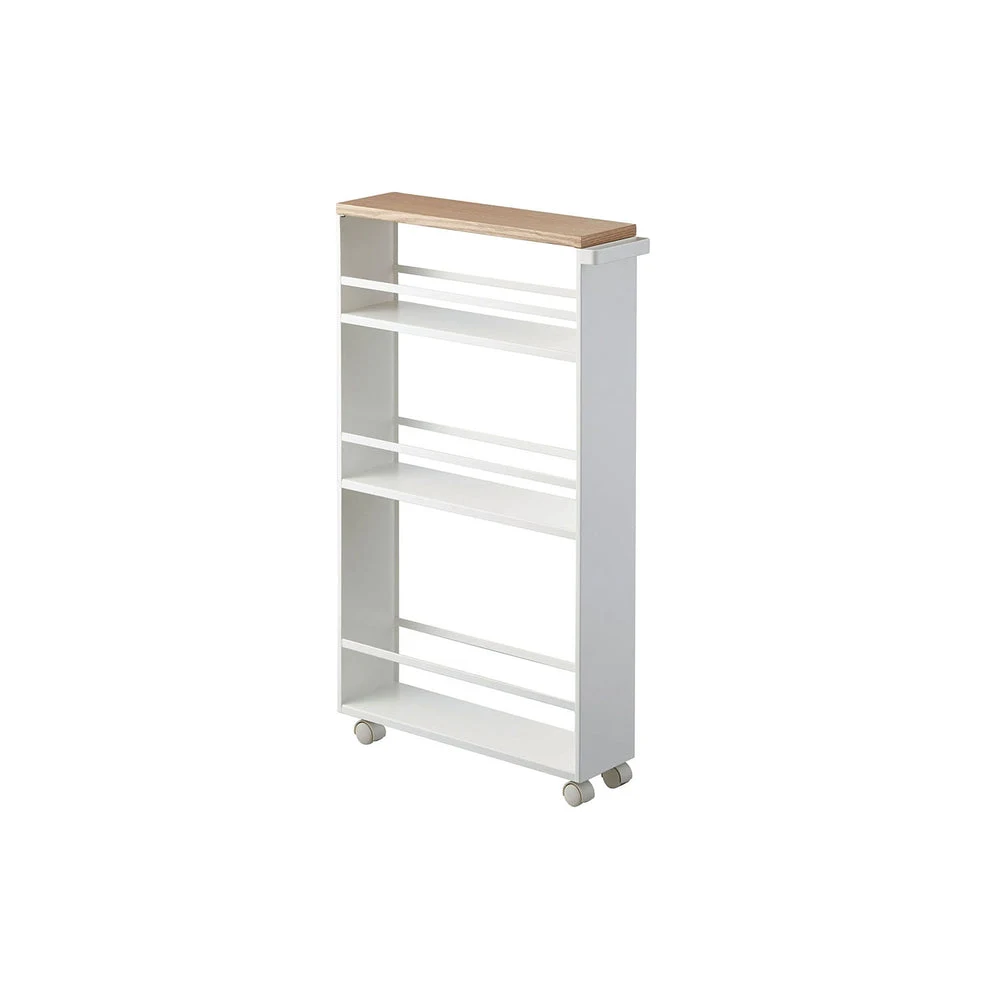
Yamazaki Tower Slim Cart
A narrow rolling format for a measured storage gap.
Read the existing model research →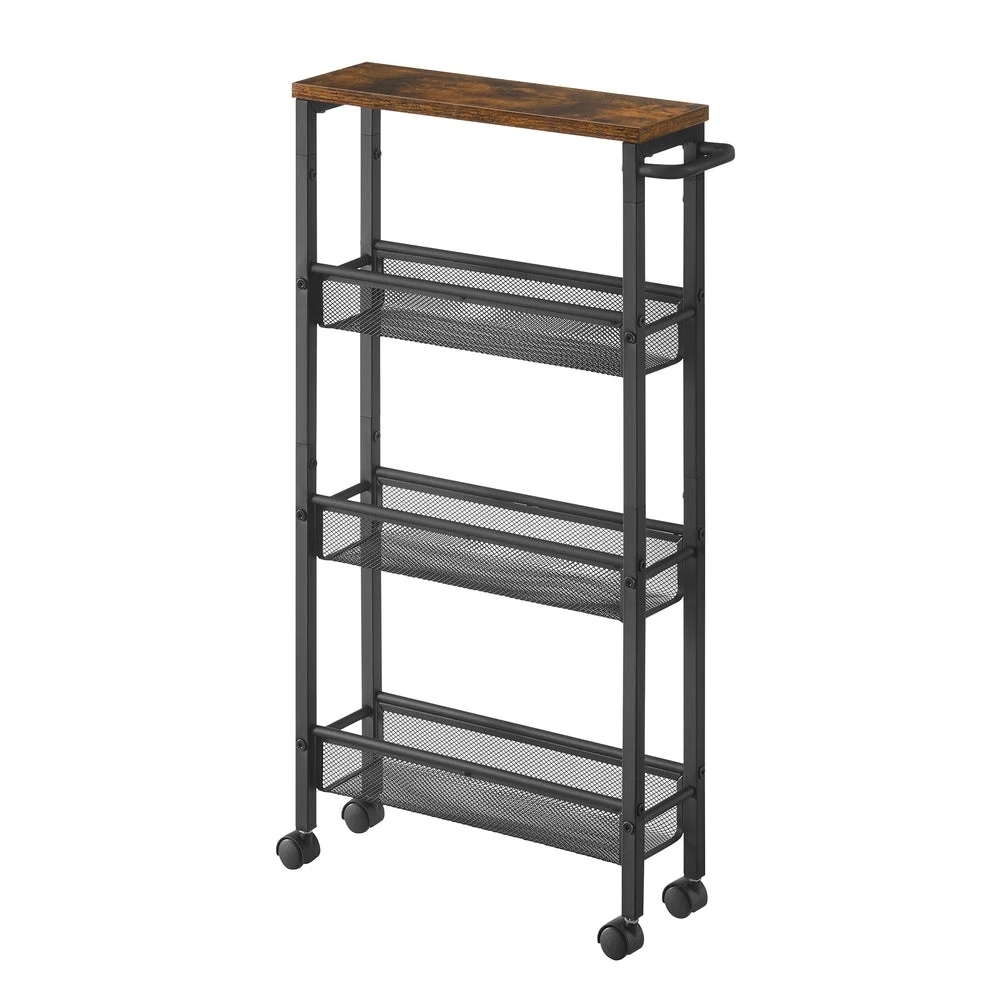
Slim Rolling Cart with Handle
Explore movable shelving for an unused kitchen gap.
Read the existing model research →References & research notes
These references inform the decision process. Numerical examples are illustrative unless explicitly attributed; they are not specifications for the linked products. Product links are examples to investigate, not confirmation that they fit your space. Verify the exact model and its current manufacturer instructions before ordering.
Created with AI assistance and reviewed for internal consistency, source relevance and links. We have not physically tested the featured products. Affiliate disclosure.