Trace actual travel
Open the door through its ordinary range and mark the outer edge and handle path. Compare these with the cart's complete dimensions. A narrow body may still conflict with a projecting handle or hook.
Evaluate the closed-door routine
Ask when you need to retrieve contents. If the door must be closed before every use, decide whether that suits the room's activity and other household members rather than assuming the inconvenience is minor.
Check return and parking
A mobile cart still needs a clear destination when pulled out. Test where it waits while someone enters the room. Otherwise the niche merely moves the obstruction from one position to another.
Prefer suitable low-frequency contents
An awkward niche may suit occasional supplies better than daily cooking tools. If access remains troublesome, leaving the area clear may be more useful than forcing furniture into every available corner.
Illustrative scenario: an infrequently used serving cart can be accessed with the door closed, but a breakfast cart would interrupt the morning entrance route. The same niche supports these tasks very differently.
Continue your research.
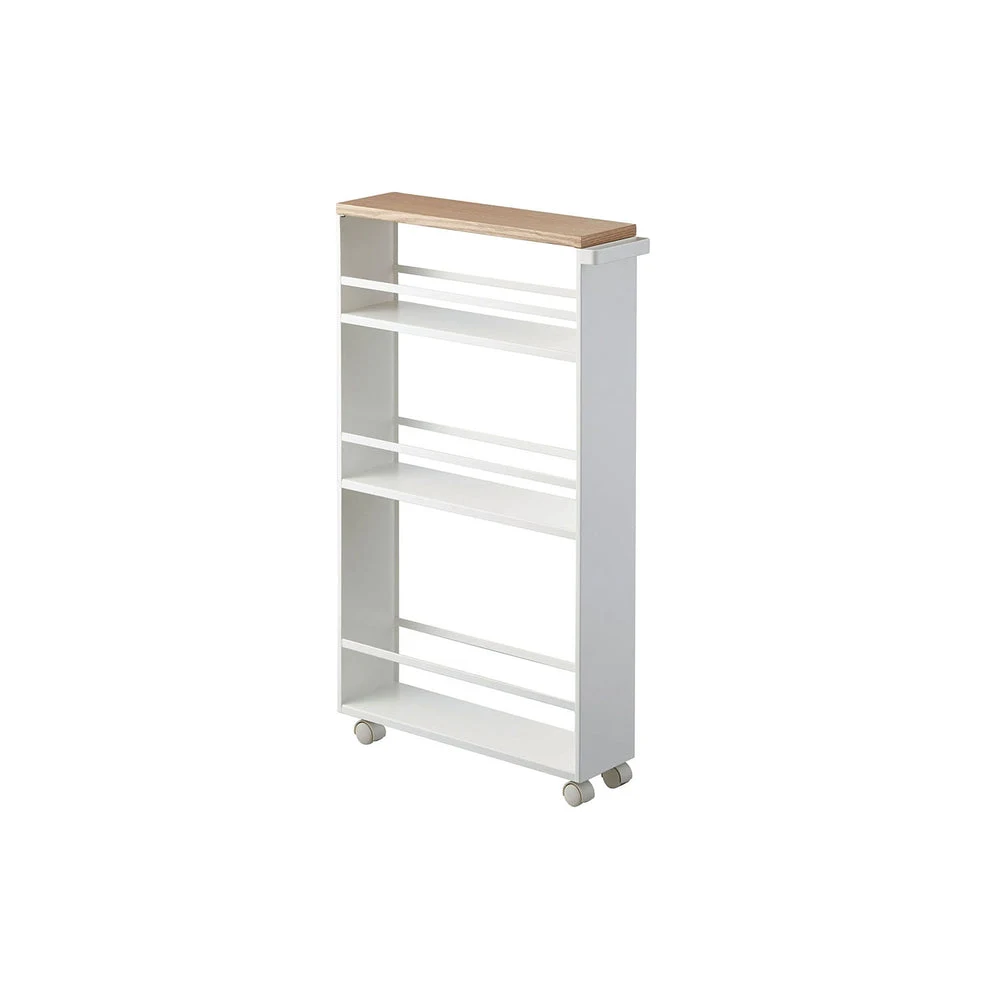
Yamazaki Tower Slim Cart
A narrow rolling format for a measured storage gap.
Read the existing model research →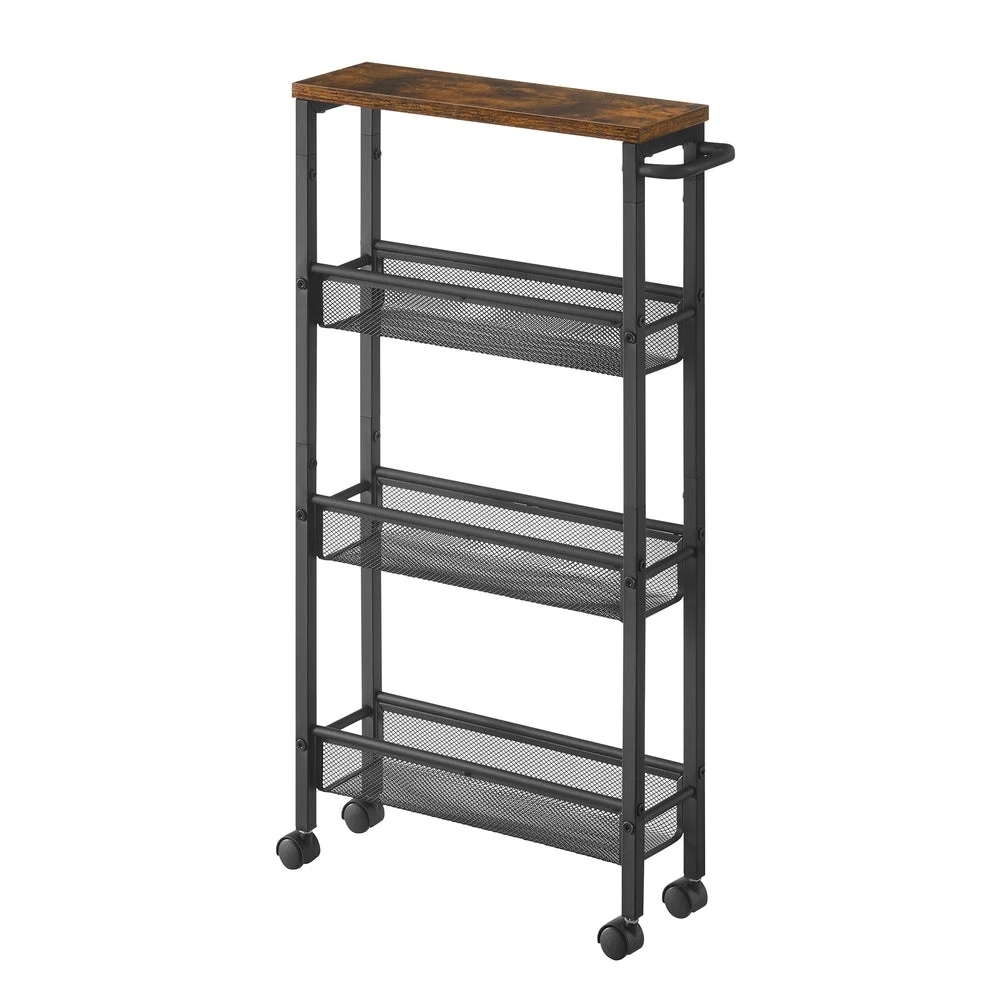
Slim Rolling Cart with Handle
Explore movable shelving for an unused kitchen gap.
Read the existing model research →References & research notes
These references inform the decision process. Numerical examples are illustrative unless explicitly attributed; they are not specifications for the linked products. Product links are examples to investigate, not confirmation that they fit your space. Verify the exact model and its current manufacturer instructions before ordering.
Created with AI assistance and reviewed for internal consistency, source relevance and links. We have not physically tested the featured products. Affiliate disclosure.