Use the occupied arrangement
Pull chairs into their usual positions and mark the cart location. Include a person's movement when sitting down or standing up. An unused dining set can make the available storage gap look misleadingly generous.
Separate serving from storage
Keep the cart's intended role specific. A surface that holds serving dishes during dinner needs clear space at that moment; filling it permanently with pantry overflow undermines the reason for placing it there.
Check access from the table
Try reaching the planned shelves while the closest seat is occupied. If the cart must roll away for every retrieval, another position may support shared meals with fewer interruptions and collisions.
Consider visual weight
View the arrangement from the table and room entrance. Open packages at eye level can dominate a compact eating area. Enclosed storage or a lower profile may better support the atmosphere you want.
Illustrative scenario: a cart fits beside a table before dinner, but the end chair overlaps its handle when occupied. Moving the cart to a different wall preserves both the seat and a useful serving route.
Continue your research.
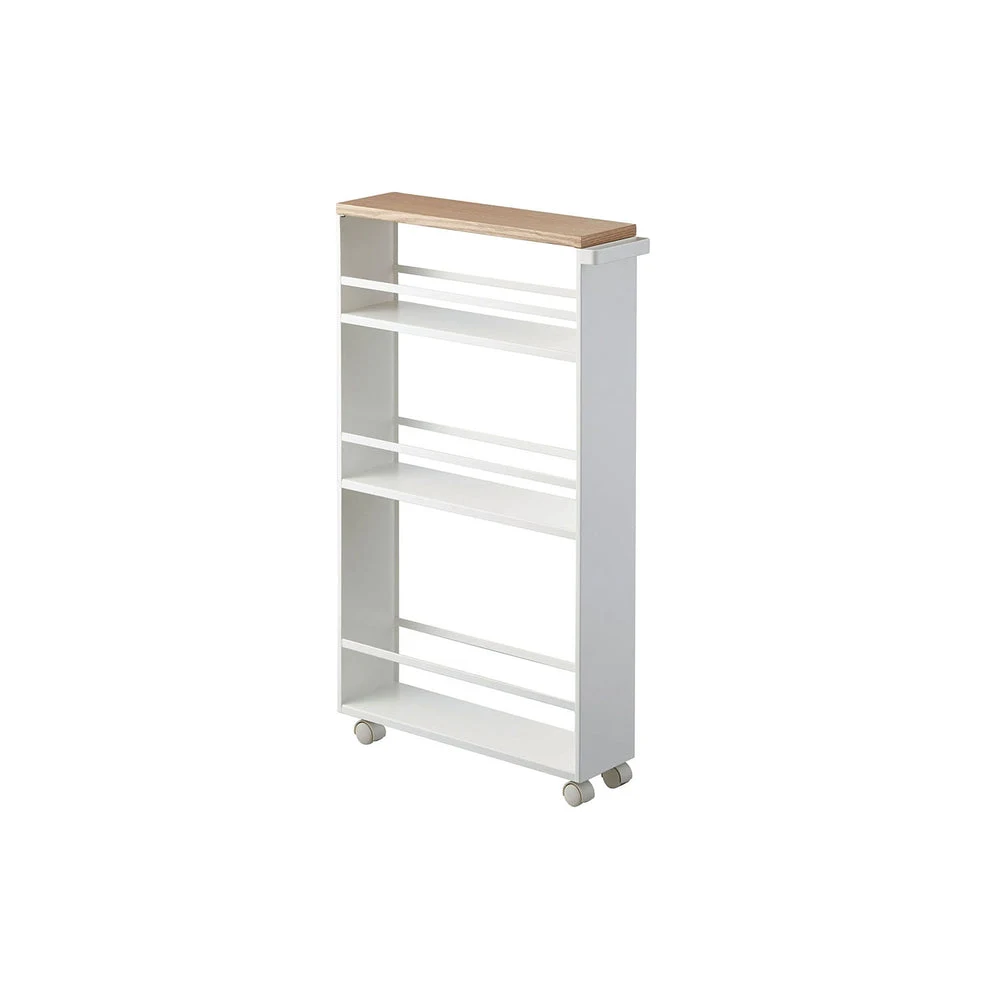
Yamazaki Tower Slim Cart
A narrow rolling format for a measured storage gap.
Read the existing model research →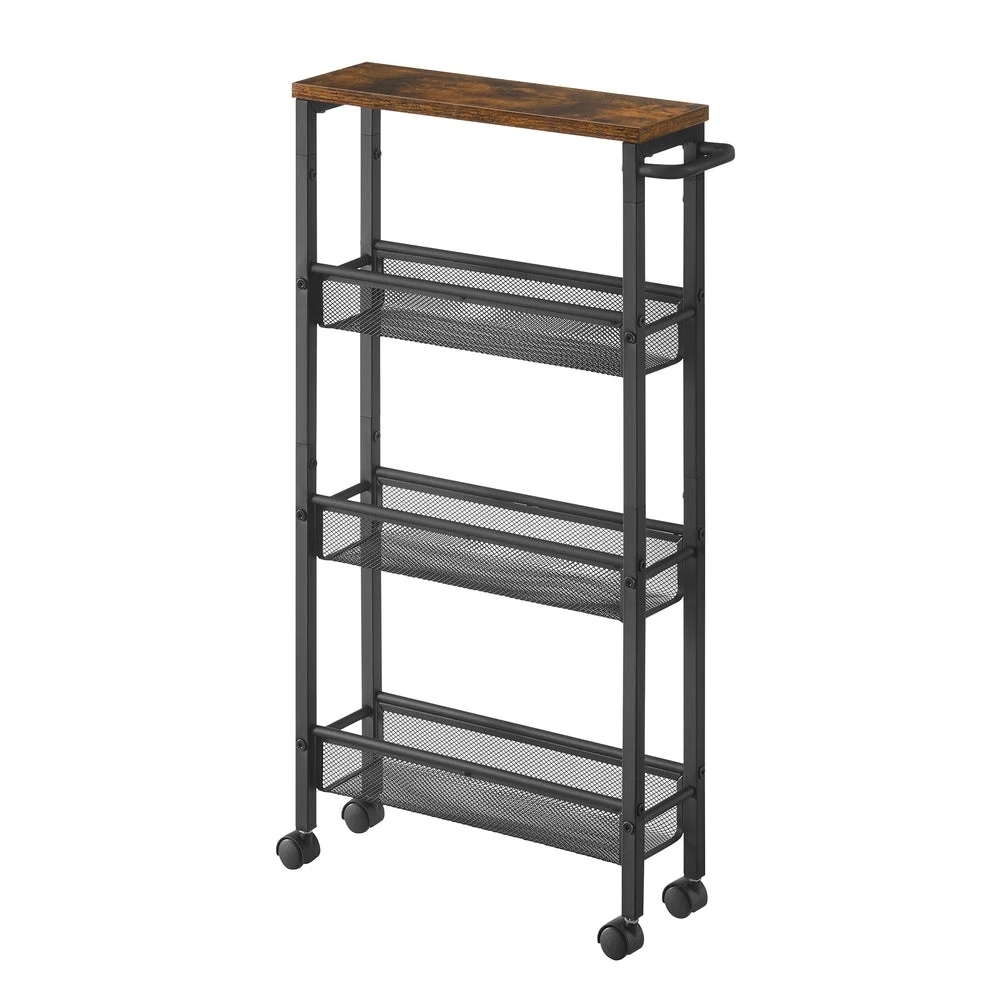
Slim Rolling Cart with Handle
Explore movable shelving for an unused kitchen gap.
Read the existing model research →References & research notes
These references inform the decision process. Numerical examples are illustrative unless explicitly attributed; they are not specifications for the linked products. Product links are examples to investigate, not confirmation that they fit your space. Verify the exact model and its current manufacturer instructions before ordering.
Created with AI assistance and reviewed for internal consistency, source relevance and links. We have not physically tested the featured products. Affiliate disclosure.