Name the zone
Choose a clear purpose such as shared breakfast supplies or one resident's cookware. Mixed ownership without visible boundaries makes a compact cart hard to maintain because nobody knows which objects can be moved.
Reserve common access
Do not park the cart in front of shared storage merely because its contents belong to one person. Test the location while another resident uses the sink, refrigerator and most frequently opened cabinets.
Use readable divisions
A shallow bin or shelf label can distinguish groups without assigning every small object a permanent slot. Keep the system understandable to someone who did not organize it and is putting away groceries quickly.
Set a reset rule
Decide where the cart returns after use and what may remain on top. A simple shared agreement may provide more practical benefit than extra shelves that gradually collect items without an owner.
Illustrative scenario: housemates designate the upper shelf for shared tea supplies and a lower bin for one person's baking tools. The cart returns to the same wall after use, so both groups remain easy to locate.
Continue your research.
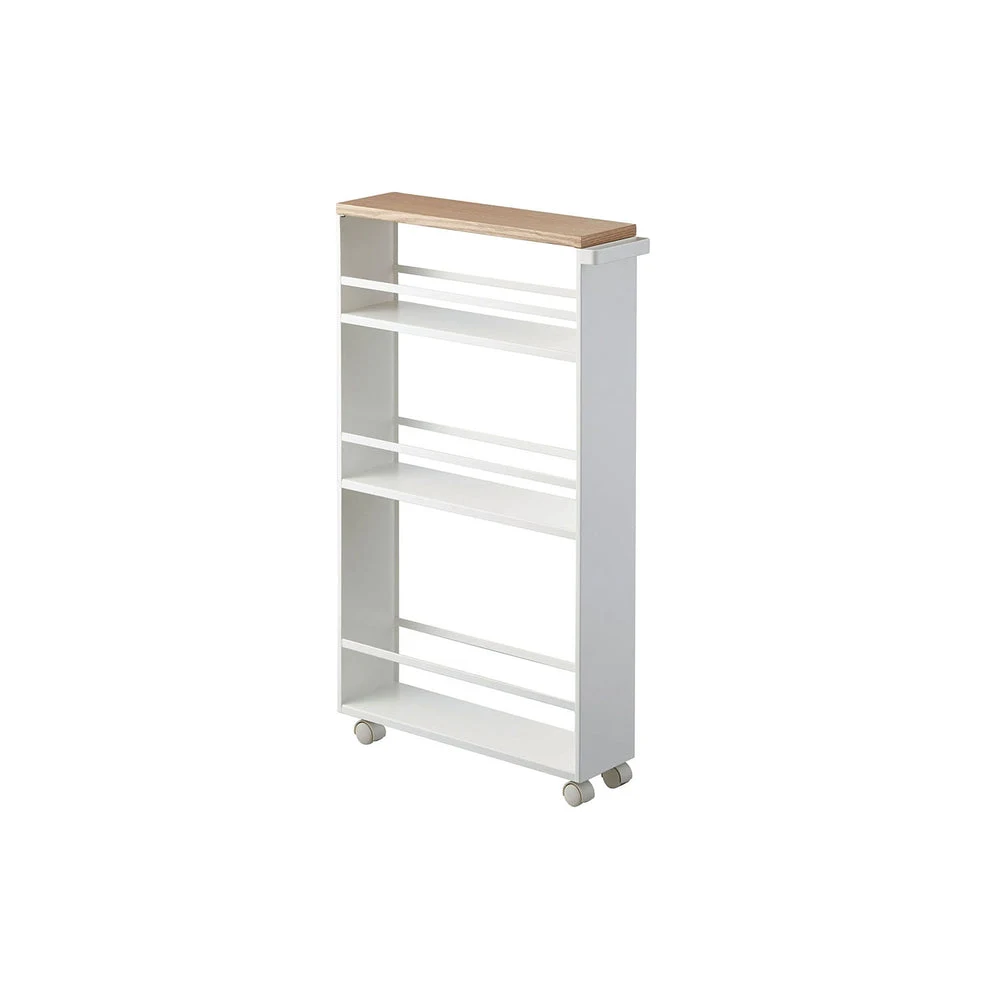
Yamazaki Tower Slim Cart
A narrow rolling format for a measured storage gap.
Read the existing model research →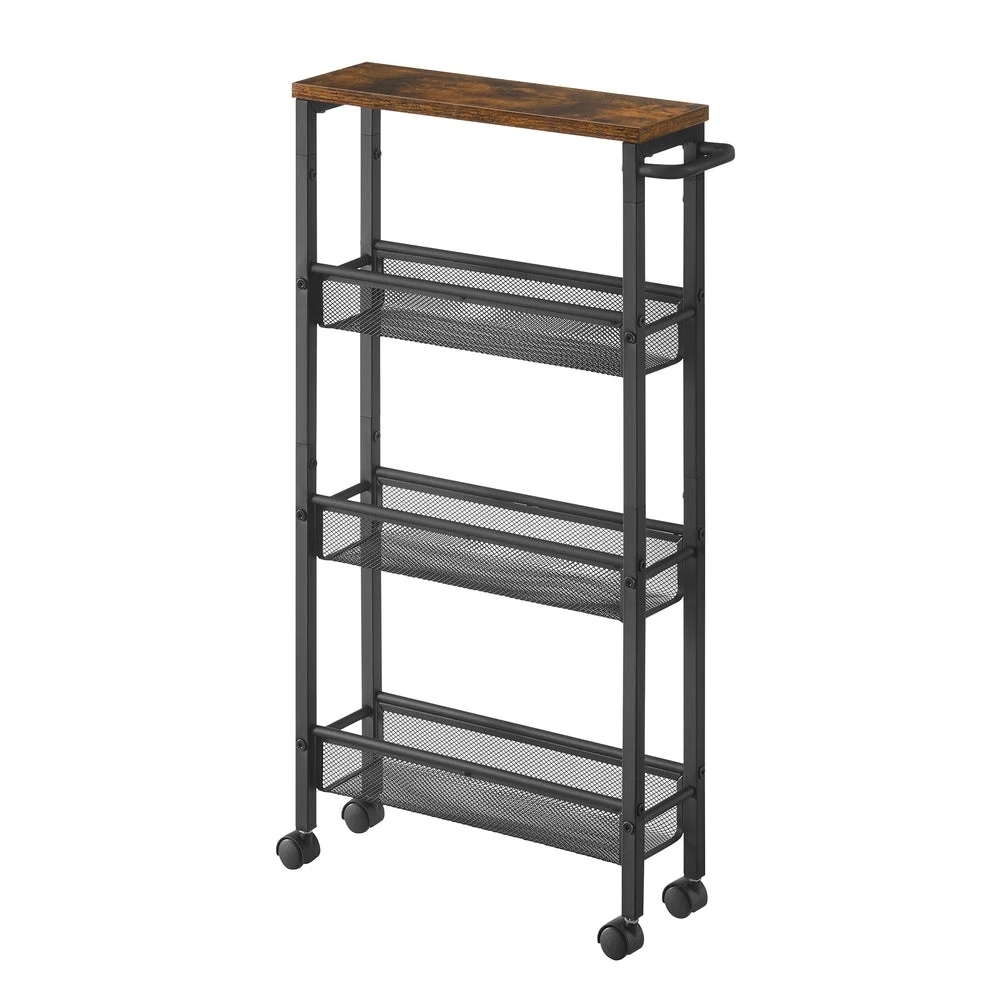
Slim Rolling Cart with Handle
Explore movable shelving for an unused kitchen gap.
Read the existing model research →References & research notes
These references inform the decision process. Numerical examples are illustrative unless explicitly attributed; they are not specifications for the linked products. Product links are examples to investigate, not confirmation that they fit your space. Verify the exact model and its current manufacturer instructions before ordering.
Created with AI assistance and reviewed for internal consistency, source relevance and links. We have not physically tested the featured products. Affiliate disclosure.