Examine container bases
Set representative jars, narrow bottles and small tools on a comparable surface. Objects with small bases can behave differently from large boxes. Avoid assuming that a basket suitable for packaged goods also suits every loose item.
Check side access
Deep basket walls may contain objects well but make side retrieval difficult. If the cart parks under a counter, lifting something over a high rim can be awkward even when the object fits inside.
Consider authorized accessories
If the manufacturer offers an appropriate liner or bin, evaluate its dimensions and care instructions. Do not assume any improvised insert will preserve the cart's intended function or stated load limits.
Prioritize the dominant category
Choose the shelf style around the items that occupy most of the cart. A small removable container can organize a few loose pieces, but an unsuitable base surface can frustrate the entire arrangement.
Illustrative scenario: boxed snacks sit comfortably in a basket, while tiny loose measuring spoons disappear among them. A dedicated small container can preserve access without changing the whole cart format.
Continue your research.
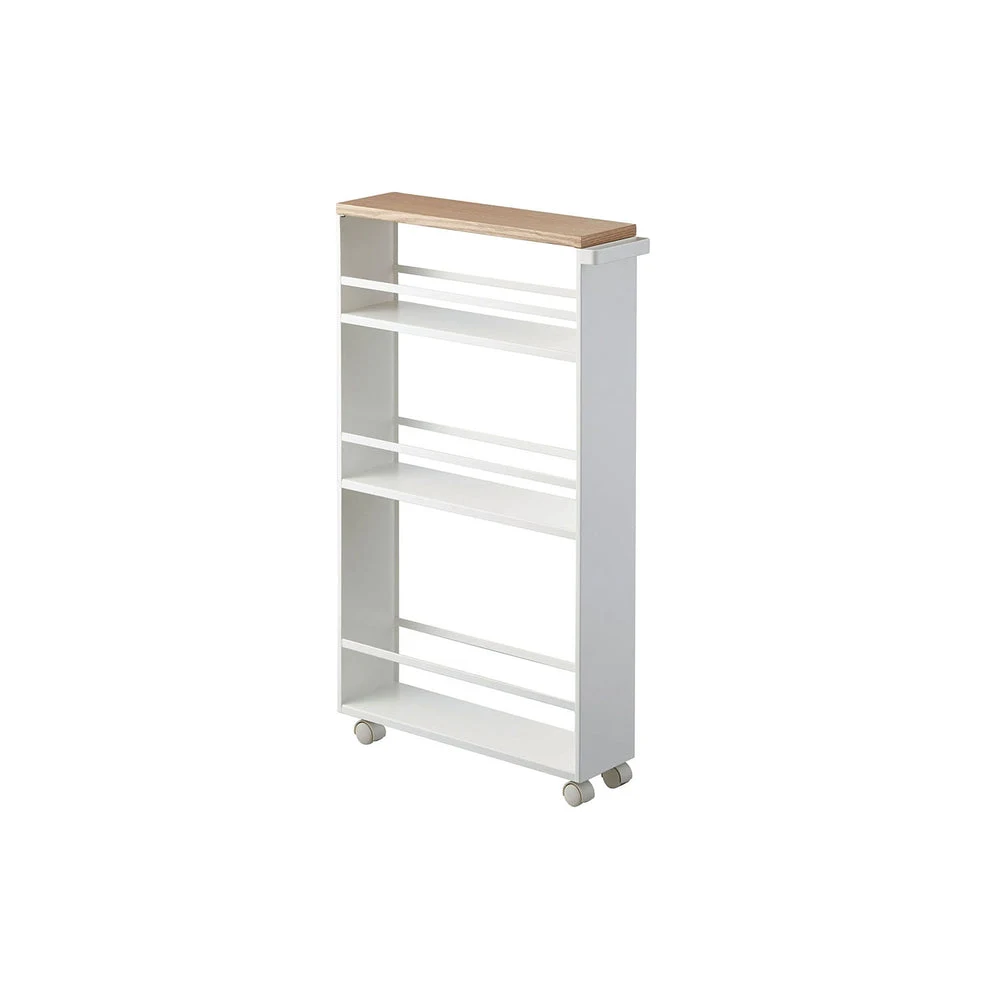
Yamazaki Tower Slim Cart
A narrow rolling format for a measured storage gap.
Read the existing model research →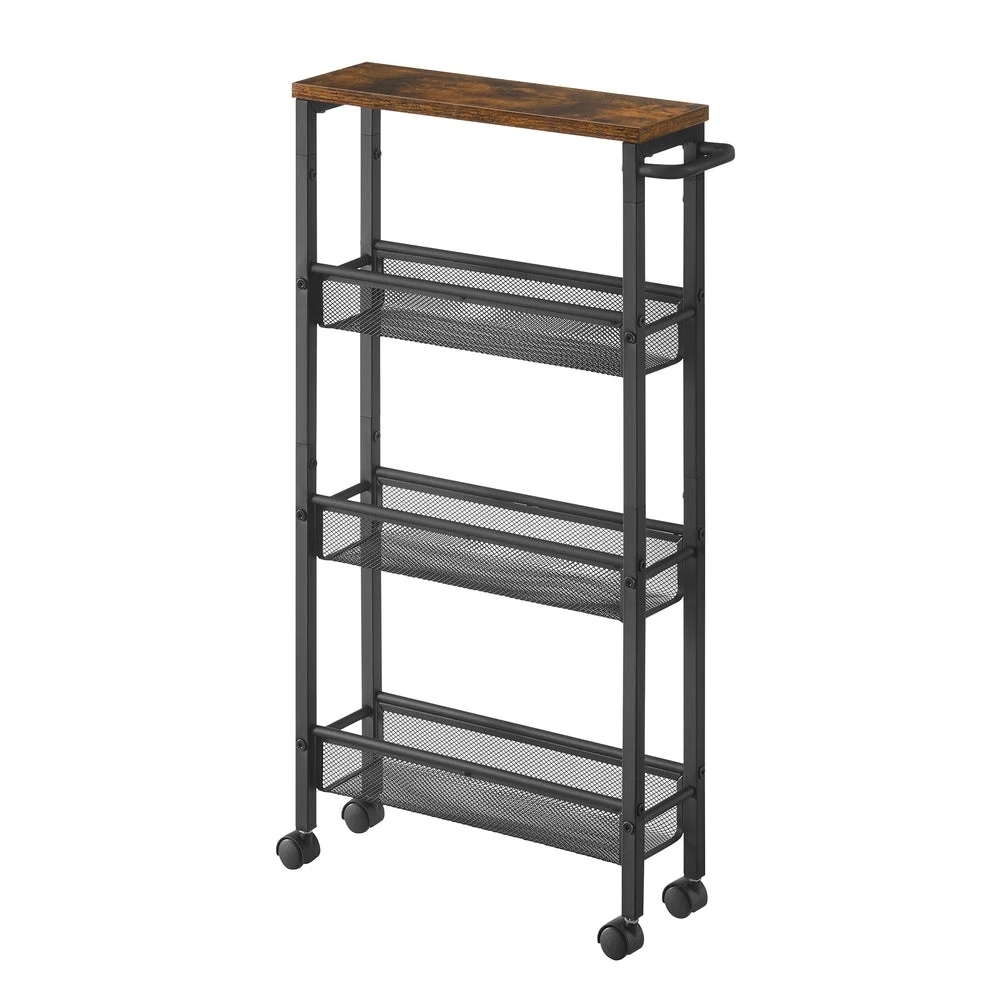
Slim Rolling Cart with Handle
Explore movable shelving for an unused kitchen gap.
Read the existing model research →References & research notes
These references inform the decision process. Numerical examples are illustrative unless explicitly attributed; they are not specifications for the linked products. Product links are examples to investigate, not confirmation that they fit your space. Verify the exact model and its current manufacturer instructions before ordering.
Created with AI assistance and reviewed for internal consistency, source relevance and links. We have not physically tested the featured products. Affiliate disclosure.