Lay out both collections
Arrange each person’s active pairs in their normal storage orientation. Compare the occupied width and height, including footwear that extends beyond a shelf edge or needs more room to be removed.
Test equal space honestly
Try the same shelf width for each person before assuming it is fair or useful. One person may fit more low-profile shoes while the other needs fewer but larger spaces for boots or athletic footwear.
Assign the best access
Consider who uses which pair most often and whether everyone can reach their own shoes without moving another person’s belongings. A vertical split or separate shelf group can work better than alternating individual pairs.
Keep the arrangement adjustable
Use flexible category boundaries during a trial period and revisit them when seasonal footwear changes. A shared rack should reflect current needs rather than preserve a perfectly equal layout that makes daily returns awkward for one person. A removable divider or simple label can make a shared boundary easier to revise.
A larger athletic pair may need the width occupied by two smaller low-profile pairs; allowing that difference can make a shared shelf more usable without increasing its overall footprint.
Continue your research.
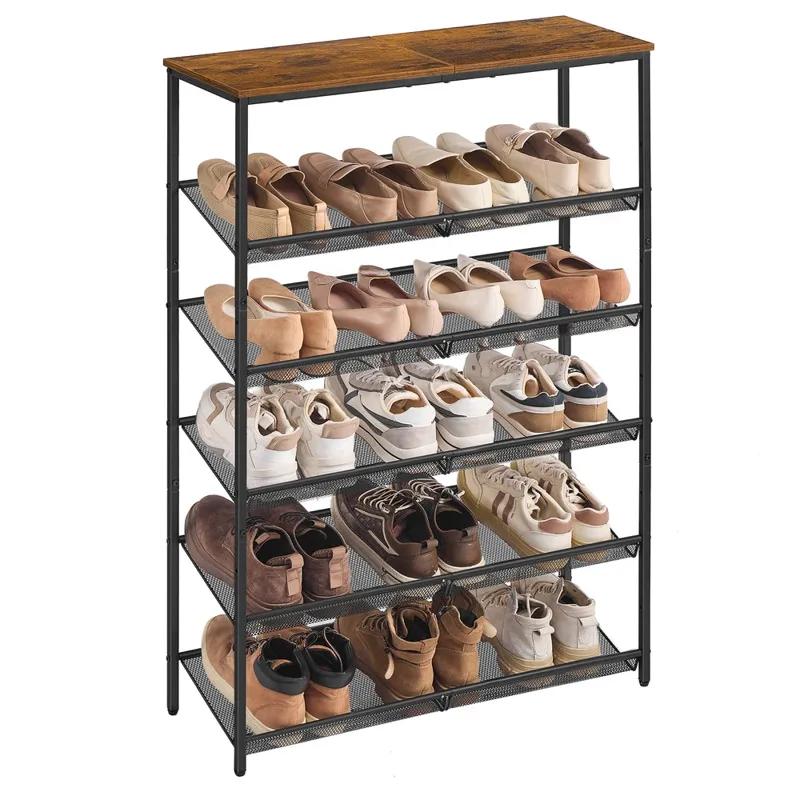
Adjustable shoe rack with storage shelves for entryway
Check how your footwear fits the usable shelf or compartment dimensions.
Read the existing model research →References & research notes
These references inform the decision process. Numerical examples are illustrative unless explicitly attributed; they are not specifications for the linked products. Product links are examples to investigate, not confirmation that they fit your space. Verify the exact model and its current manufacturer instructions before ordering.
Created with AI assistance and reviewed for internal consistency, source relevance and links. We have not physically tested the featured products. Affiliate disclosure.