Measure without reshaping
Place the sneakers as you normally leave them, with their tongues and collars in a natural position. Do not plan capacity around compressing or bending them into an opening unless that storage method suits the footwear’s own care guidance.
Check shelf adjustability
Look for the exact configuration options described by the manufacturer. A photograph with a tall pair on the top does not establish that the interior shelves can move or that every level accommodates the same height.
Include your hand position
Allow for grasping and removing the pair without dragging it against the shelf above. A shoe that fits between two shelves can still be awkward to retrieve when the opening offers almost no movement beyond the shoe itself.
Assign the top deliberately
The top may suit taller footwear if it is intended as usable storage, but compare the overall arrangement with the entry’s appearance and access. Avoid reserving the only easily reached surface for a category you wear rarely while daily shoes remain difficult to remove.
A rack with fewer usable levels can serve a high-top collection better than a taller rack whose closely spaced shelves leave several levels unsuitable for your actual shoes.
Continue your research.
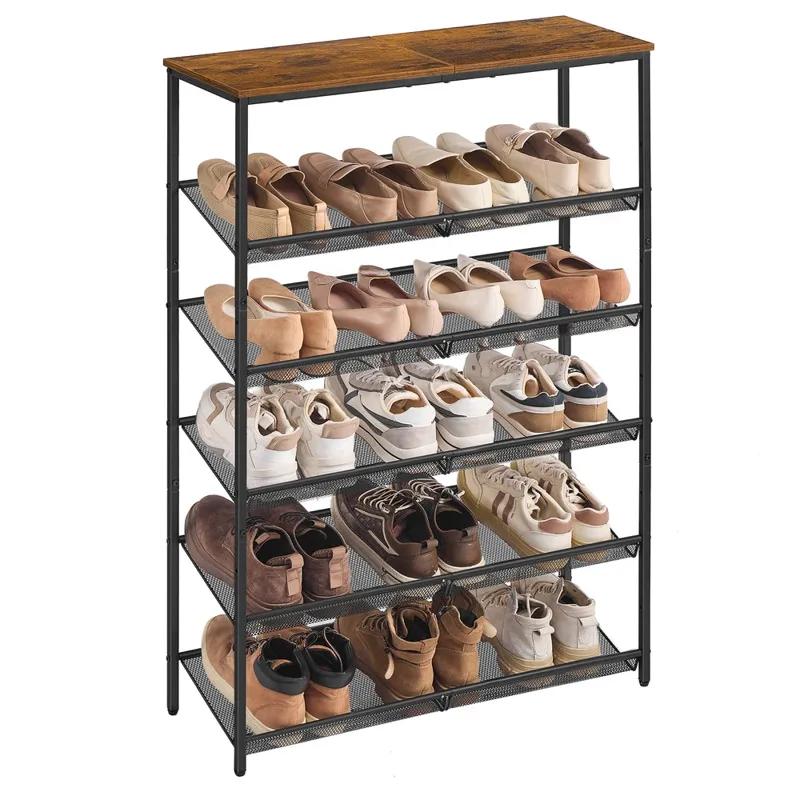
Adjustable shoe rack with storage shelves for entryway
Check how your footwear fits the usable shelf or compartment dimensions.
Read the existing model research →References & research notes
These references inform the decision process. Numerical examples are illustrative unless explicitly attributed; they are not specifications for the linked products. Product links are examples to investigate, not confirmation that they fit your space. Verify the exact model and its current manufacturer instructions before ordering.
Created with AI assistance and reviewed for internal consistency, source relevance and links. We have not physically tested the featured products. Affiliate disclosure.