Use your largest everyday pair
Set the shoes together in the orientation you would store them. Compare their full length, height and width with the manufacturer’s internal compartment information. A stated pair count does not establish that your particular footwear will fit comfortably.
Map the opening arc
Mark the furthest point of the tipped compartment on the floor. Include handles and the space you need to stand while removing shoes. The cabinet may sit against a wall while its working movement projects into the route through the entry.
Check the internal dividers
Read whether the selected model’s dividers are fixed, adjustable or removable. Removing a divider may accommodate taller shoes but change the number of pairs you can organize; compare the actual configuration you intend to use.
Review installation details
Read the manufacturer’s placement and installation instructions before choosing the wall. Skirting boards, nearby trim and the intended wall attachment can affect the final position. Keep these documented requirements with your measurements instead of treating the empty wall as sufficient evidence of fit.
For example, a pair of bulky sneakers might use a compartment differently from two low-profile pairs; inspect that difference before using advertised capacity to choose a cabinet.
Continue your research.
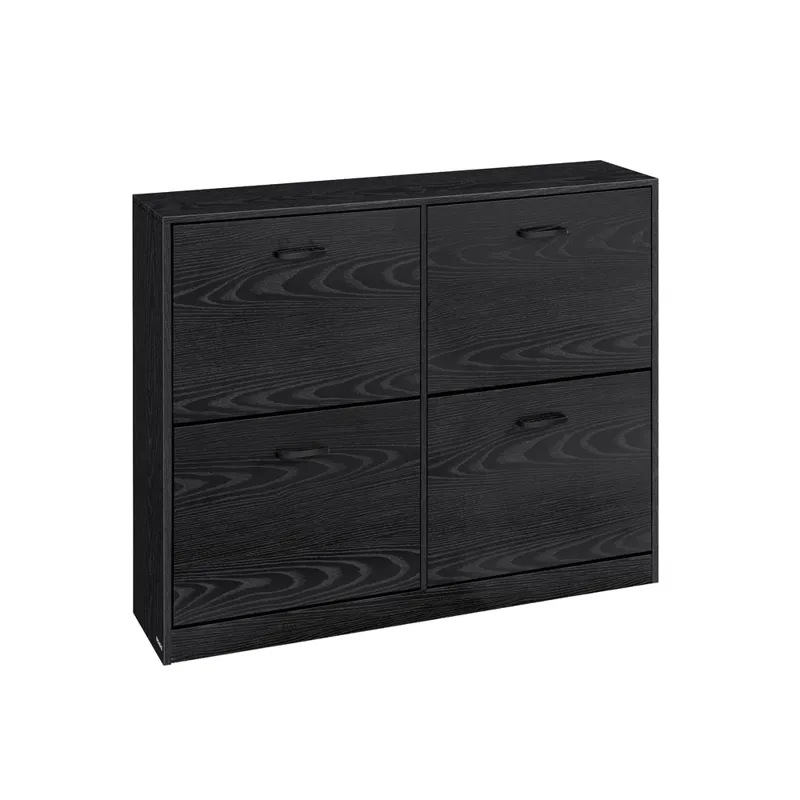
Kailyn Collection - Shoe Cabinet with 4 Flip Doors
Check how your footwear fits the usable shelf or compartment dimensions.
Read the existing model research →References & research notes
These references inform the decision process. Numerical examples are illustrative unless explicitly attributed; they are not specifications for the linked products. Product links are examples to investigate, not confirmation that they fit your space. Verify the exact model and its current manufacturer instructions before ordering.
Created with AI assistance and reviewed for internal consistency, source relevance and links. We have not physically tested the featured products. Affiliate disclosure.