Inspect the shelf construction
Look at bar spacing, mesh openings or a continuous shelf surface on the selected model. Compare those details with the narrowest part of the heel. A distant product photograph may not show the relationship clearly enough for a confident decision.
Keep pairs easy to identify
Arrange a representative pair as you would return it after wearing. Consider whether the shelf lets you see the front or side you use to recognize the shoes without placing them in a complicated alternating display.
Check vertical access
Some heels need more height to remove than to sit on a shelf. Include the angle you use to lift the pair and compare it with the space above, especially if there is another shelf immediately overhead.
Avoid unsupported adaptations
If considering shelf liners or inserts, check compatibility and care guidance rather than assuming any added surface is suitable. Sometimes choosing a different documented shelf format is simpler than modifying a rack whose construction does not match the footwear.
A continuous shelf may offer a more straightforward comparison for narrow heels than widely spaced rails, but inspect the exact model and your own shoes before choosing.
Continue your research.
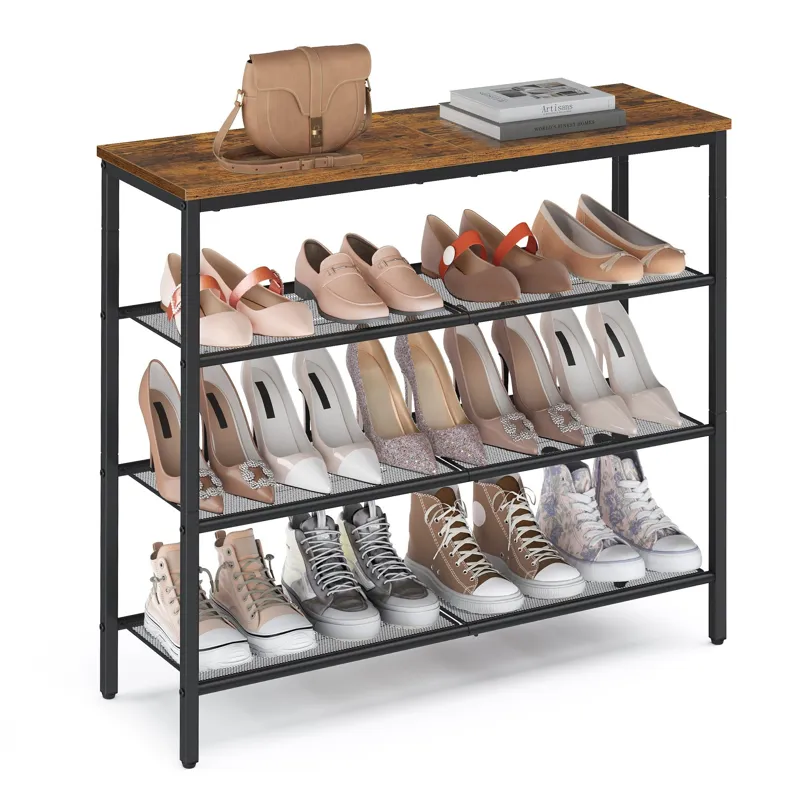
Large shoe rack with metal mesh shelves for entryway
Check how your footwear fits the usable shelf or compartment dimensions.
Read the existing model research →References & research notes
These references inform the decision process. Numerical examples are illustrative unless explicitly attributed; they are not specifications for the linked products. Product links are examples to investigate, not confirmation that they fit your space. Verify the exact model and its current manufacturer instructions before ordering.
Created with AI assistance and reviewed for internal consistency, source relevance and links. We have not physically tested the featured products. Affiliate disclosure.