Rehearse sitting and storing
Use an existing chair to model where you would sit and where your shoes would go afterward. Check whether you can reach the storage while seated or whether you naturally stand first; either routine needs enough room to work.
Compare the door footprint
A hinged door, sliding panel and open cubby occupy different working spaces. Measure the selected design with its door open and include your feet and hands, not just the outside dimensions of the closed bench.
Consider visibility preferences
Open shelves make the current collection visible; doors conceal it but require remembering what is inside. Choose according to how you select shoes and how much visible footwear you are comfortable seeing from the rest of the home.
Separate seating from storage claims
Read the manufacturer’s intended seating use, assembly guidance and stated limits for the exact model. A storage shelf that resembles a bench should not be assumed to serve as seating. Compare the documented functions rather than relying on its silhouette.
A door-front bench may suit a deliberate put-away routine, while an open shelf may be easier for a household that wants to drop shoes directly into visible spaces.
Continue your research.
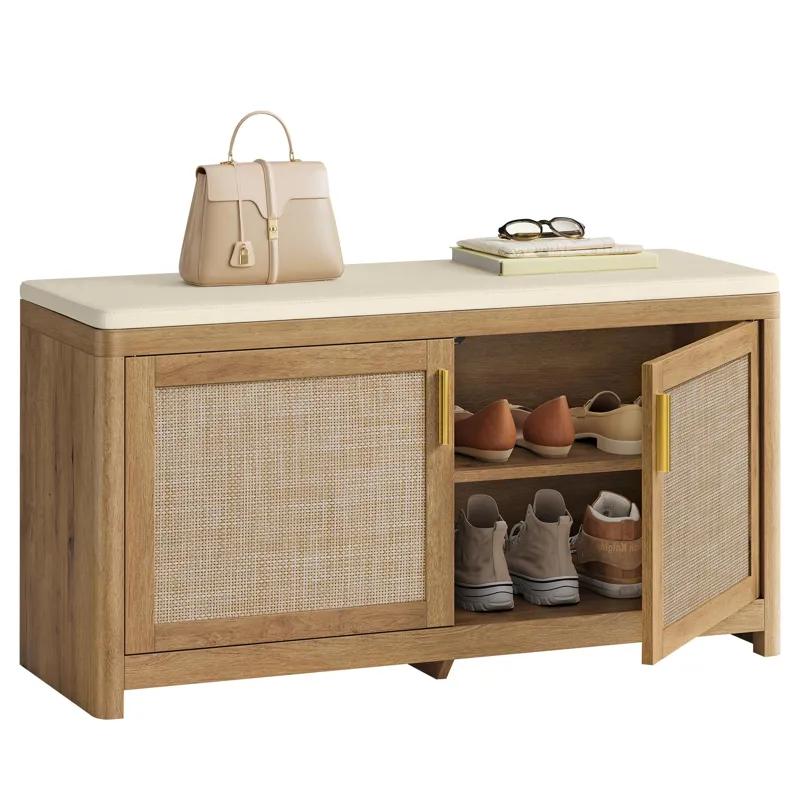
Boho Shoe Bench with Cushion, 2 Rattan-Look Cabinet Doors
Decide whether seating, a footrest, or concealed storage is your main requirement.
Read the existing model research →References & research notes
These references inform the decision process. Numerical examples are illustrative unless explicitly attributed; they are not specifications for the linked products. Product links are examples to investigate, not confirmation that they fit your space. Verify the exact model and its current manufacturer instructions before ordering.
Created with AI assistance and reviewed for internal consistency, source relevance and links. We have not physically tested the featured products. Affiliate disclosure.