Write the weekly rotation
List the footwear you expect to use for the next ordinary workweek. Include commuting or exercise changes only when they are part of your real routine, rather than leaving every possible pair in the entry indefinitely.
Choose a visible selection method
If you choose shoes while dressing, a closet group may be more convenient. If you decide at the front door, an accessible entry shelf might make more sense. Let the decision point guide the storage location.
Allow a temporary exchange
Keep one flexible place for a pair that changes with weather or plans. A little intentional flexibility can prevent a carefully limited shoe arrangement from spilling onto the floor whenever the schedule changes.
Reset at a routine moment
Exchange the active set when planning the week or putting laundry away. The routine matters more than the style of the rack: without a regular review, a weekly rotation can become permanent storage for every pair worn in the last month.
For example, one office pair and one everyday pair can remain near the entry while occasional formal shoes stay identified in the closet until a specific event requires them.
Continue your research.
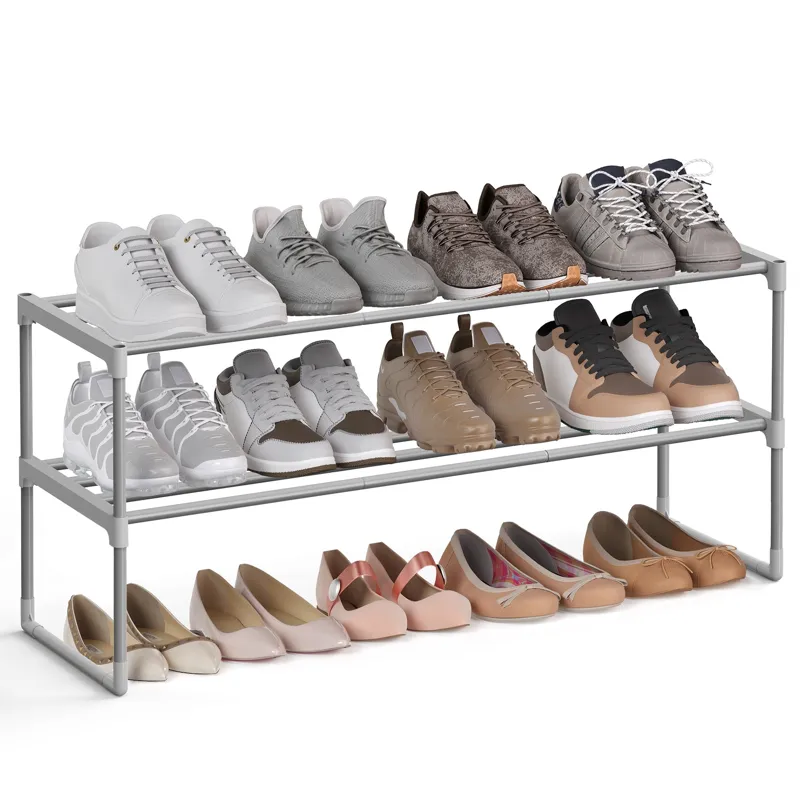
Shoe Rack, 2-Tier Shoe Organizer, Metal Storage Shelf
Check how your footwear fits the usable shelf or compartment dimensions.
Read the existing model research →References & research notes
These references inform the decision process. Numerical examples are illustrative unless explicitly attributed; they are not specifications for the linked products. Product links are examples to investigate, not confirmation that they fit your space. Verify the exact model and its current manufacturer instructions before ordering.
Created with AI assistance and reviewed for internal consistency, source relevance and links. We have not physically tested the featured products. Affiliate disclosure.