Identify the actual seating need
Notice when and how often someone sits to put on shoes. If that happens only occasionally, a nearby existing chair may serve better than a permanent bench occupying the narrowest part of the entry.
Map storage formats
Compare a shallow cabinet, a compact open rack and closet storage using their full working footprints. Include opening doors and retrieval space, since the smallest closed exterior does not always produce the simplest daily arrangement.
Keep the active set limited
Store only the footwear that belongs near the door in the current routine. Moving occasional pairs to an identified closet location can reduce the required entry furniture enough to preserve a clearer arrival area.
Test the alternative route
Walk from the entry to the existing seat and back as part of an ordinary departure. If that routine is easy and the shoes have a direct return location, the separate arrangement may work without a new multipurpose furniture piece.
A compact shoe cabinet near the door and an existing suitable chair a few steps away can meet the routine without forcing a bench into an entry that cannot comfortably accommodate it.
Continue your research.
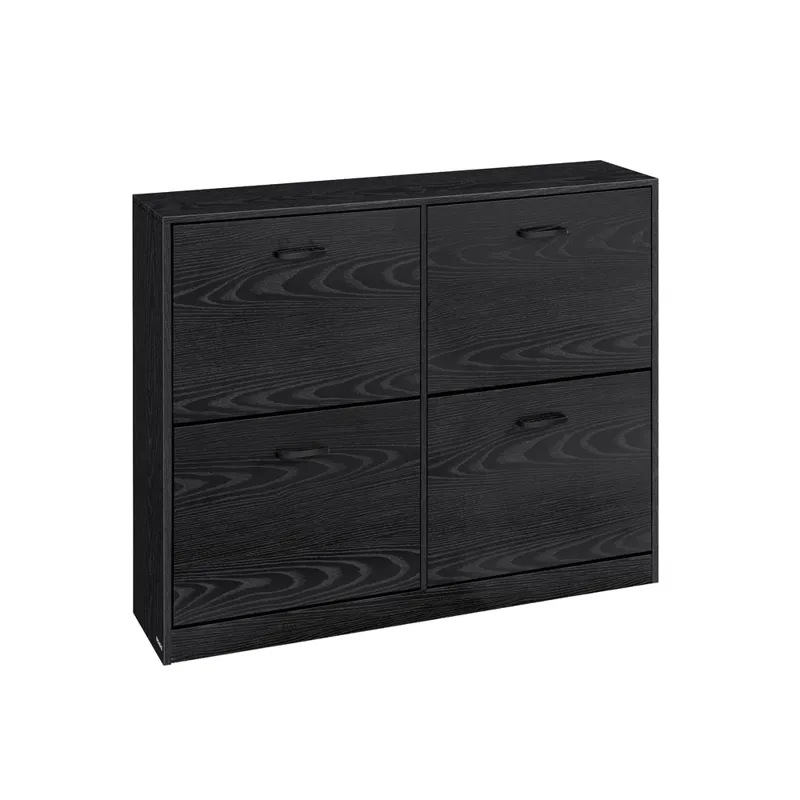
Kailyn Collection - Shoe Cabinet with 4 Flip Doors
Check how your footwear fits the usable shelf or compartment dimensions.
Read the existing model research →References & research notes
These references inform the decision process. Numerical examples are illustrative unless explicitly attributed; they are not specifications for the linked products. Product links are examples to investigate, not confirmation that they fit your space. Verify the exact model and its current manufacturer instructions before ordering.
Created with AI assistance and reviewed for internal consistency, source relevance and links. We have not physically tested the featured products. Affiliate disclosure.