Define the occasional group
Choose a specific category such as event shoes or off-season pairs. Avoid filling the organizer with unrelated items simply because there are spare compartments; a coherent group is easier to label and retrieve when needed.
Check individual fit
Measure the largest pair and compare the internal openings or documented compatibility. A flexible cover does not guarantee that a rigid shoe fits inside, and forcing a compartment closed may not suit the footwear or organizer.
Plan the opening location
Decide whether the organizer stays in place while you open it or comes out onto a clear surface. Zippers, flaps and handles need different access, especially beneath a bed or on a shelf with little overhead room.
Keep the active set separate
Do not make every morning depend on removing a covered organizer from deep storage. A small open or directly accessible daily group can coexist with covered occasional footwear without duplicating the entire collection in the entry.
For example, a labeled covered organizer of event shoes may work on an accessible closet shelf while the current work pair stays on a simple entry rack.
Continue your research.
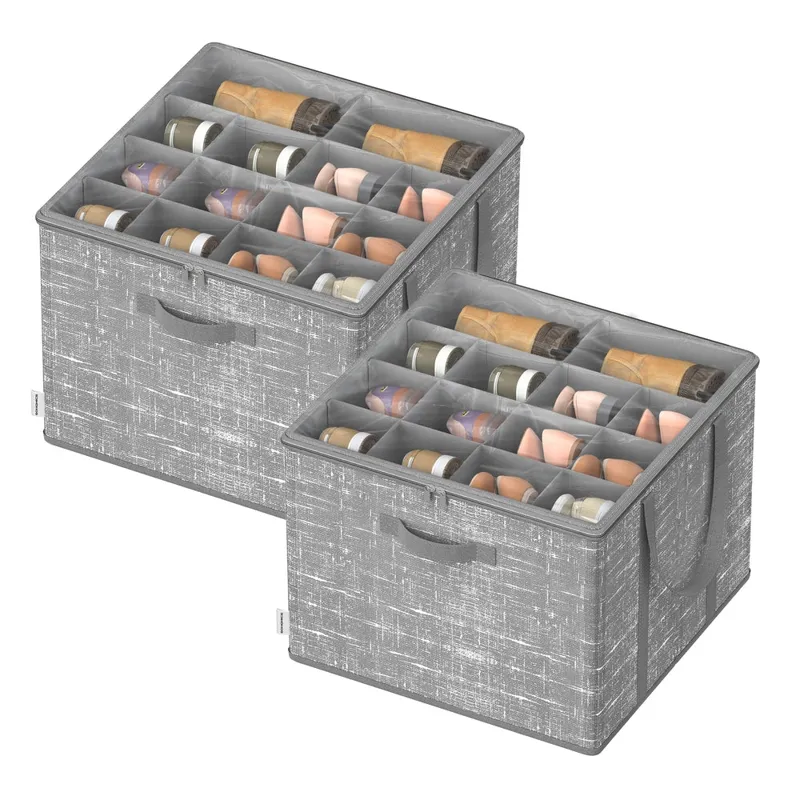
Fabric shoe organizer bin with handles and clear cover
Check how your footwear fits the usable shelf or compartment dimensions.
Read the existing model research →References & research notes
These references inform the decision process. Numerical examples are illustrative unless explicitly attributed; they are not specifications for the linked products. Product links are examples to investigate, not confirmation that they fit your space. Verify the exact model and its current manufacturer instructions before ordering.
Created with AI assistance and reviewed for internal consistency, source relevance and links. We have not physically tested the featured products. Affiliate disclosure.