Map the parked outline
Mark the full outline including handles and projecting hooks. A cart that fits beneath a counter may still leave a handle in the route to the refrigerator. Evaluate the outline you actually walk around.
Rehearse the working position
Move a cardboard stand into the proposed working position while another person opens nearby drawers. If the cart must be moved again to reach every utensil, a fixed cabinet may offer a calmer arrangement.
Decide what travels
Group items that belong to one task, such as baking tools. A cart carrying unrelated everyday supplies can become a moving obstacle because different people need it in different places at the same time.
Check the return trip
Follow the wheel route back to its parking place. Include floor transitions and the effort of turning. Read the selected cart's movement and load instructions rather than assuming an empty showroom maneuver represents a loaded cart.
Illustrative scenario: a baking cart works beside the table on weekends and parks against a blank wall afterward. If that wall is already occupied by dining chairs, the plan needs a different parking place.
Continue your research.
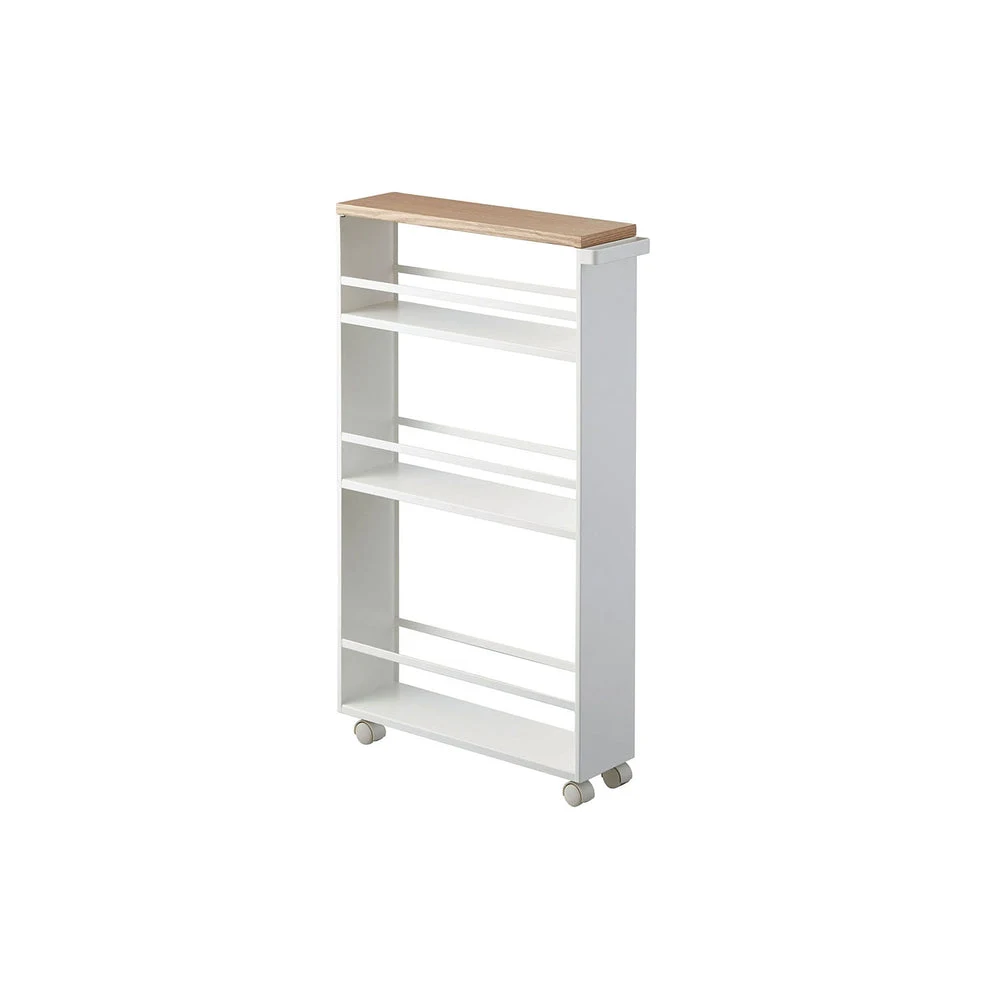
Yamazaki Tower Slim Cart
A narrow rolling format for a measured storage gap.
Read the existing model research →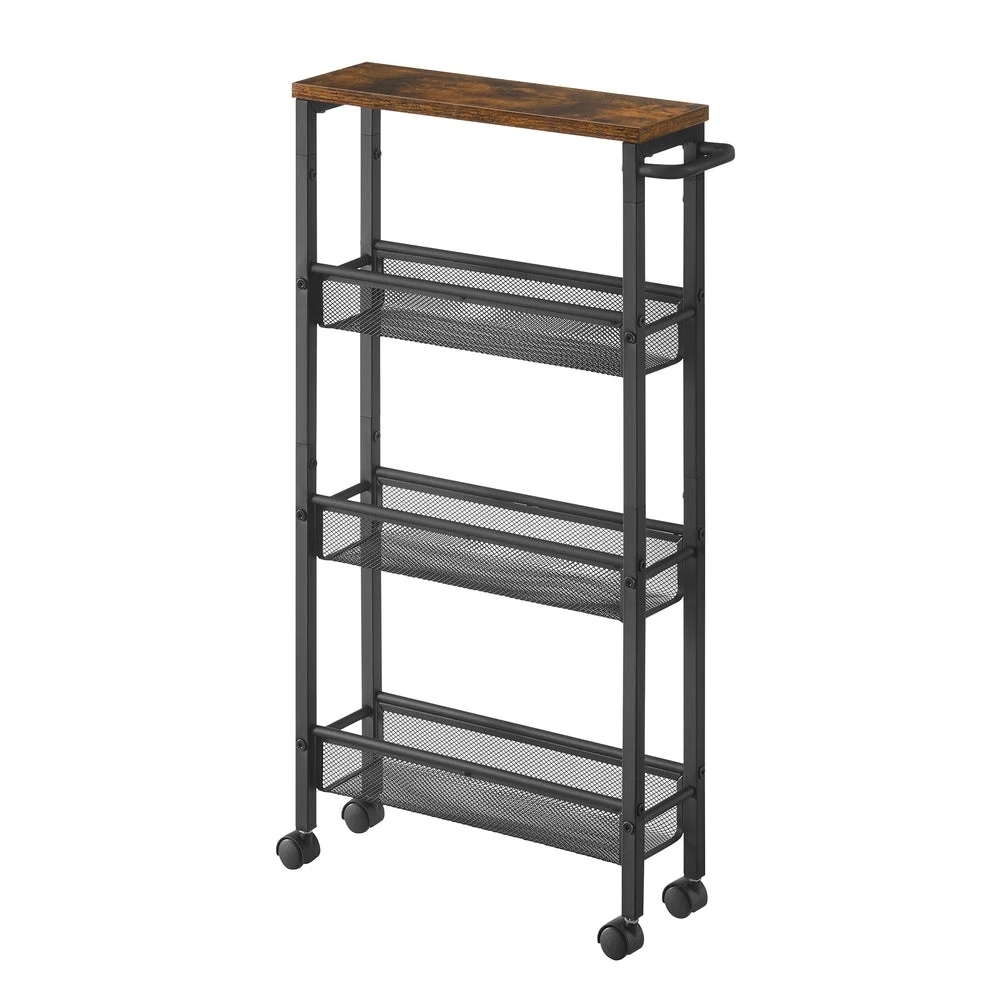
Slim Rolling Cart with Handle
Explore movable shelving for an unused kitchen gap.
Read the existing model research →References & research notes
These references inform the decision process. Numerical examples are illustrative unless explicitly attributed; they are not specifications for the linked products. Product links are examples to investigate, not confirmation that they fit your space. Verify the exact model and its current manufacturer instructions before ordering.
Created with AI assistance and reviewed for internal consistency, source relevance and links. We have not physically tested the featured products. Affiliate disclosure.