Test the occupied chair
Sit in the candidate for the kind of meal you normally share. Note whether the arms are something you actually use. A preference based on a brief showroom impression may change when you bring the chair close enough to eat or read at the table.
Check arm height and table structure
Measure the arms against the clear underside of the tabletop and any apron. Confirm the opening between supports as well. A chair can be compatible at one end of a table and blocked at another, so evaluate the positions where it will really live.
Mark the chair back when parked
Represent how far the chair tucks in after the arms meet the table. Compare that position with the route behind it. The compactness of the seat itself matters less than the full table-and-chair arrangement occupying the dining area between meals.
Consider mixed seating intentionally
Armchairs at selected positions and simpler side chairs elsewhere can meet different needs. Keep the visual combination secondary to fit. A matched set is convenient, but the room may work better when only the seats that benefit from arms have them.
A household may keep two armchairs at the ends for daily use and use narrower chairs along the sides when hosting. The plan succeeds only after each chair is checked against the table’s actual supports and underside.
Continue your research.
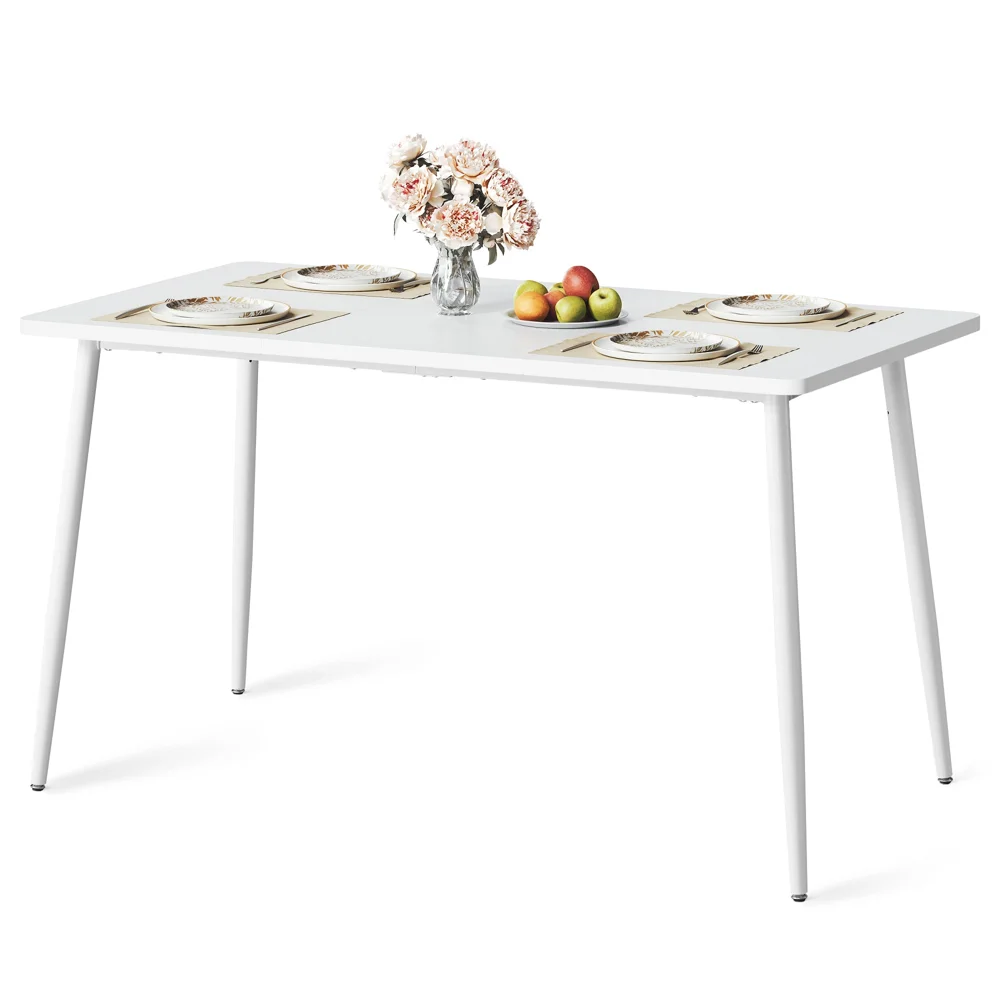
55.1 in Dining Table for 4-6 People, Modern Kitchen Table
Explore a dining surface that suits your room and seating.
Read the existing model research →References & research notes
These references inform the decision process. Numerical examples are illustrative unless explicitly attributed; they are not specifications for the linked products. Product links are examples to investigate, not confirmation that they fit your space. Verify the exact model and its current manufacturer instructions before ordering.
Created with AI assistance and reviewed for internal consistency, source relevance and links. We have not physically tested the featured products. Affiliate disclosure.