Arrange occupied dining positions
Set the table and chairs as they will be used, then mark where chair legs travel during entry and exit. Do this for end seats and side seats. A neatly tucked arrangement does not show the movement that matters at the rug edge.
Compare rug outlines
Tape candidate rug sizes and move each chair through the routine. Look at which legs remain on or cross the edge and how that feels with the intended rug construction. Use retailer diagrams as helpful examples while testing your particular table and seats.
Consider nearby room features
A larger rug may support chair movement but extend toward a cabinet or doorway. Include those features in the comparison rather than solving one issue by creating another. The right decision balances the dining routine with the rest of the compact room.
Choose the surface deliberately
Read the rug’s product and care information and consider how the chairs move on it. If possible, test a comparable construction. Do not assume that all rugs of the same size feel alike beneath dining chairs or require the same maintenance after meals.
A hypothetical rug fits under the table and tucked chairs but leaves a chair’s rear legs crossing its edge whenever someone stands. Testing that movement before ordering helps the buyer compare a different size or construction.
Continue your research.
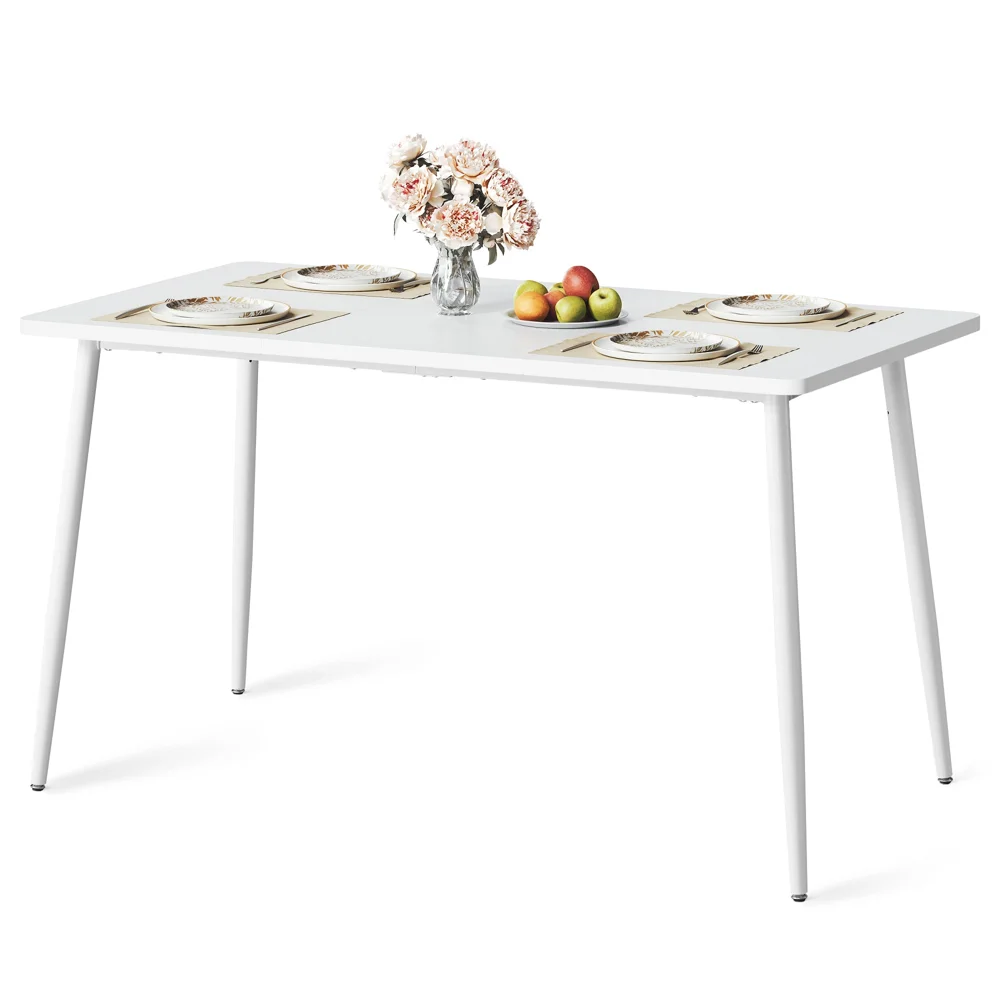
55.1 in Dining Table for 4-6 People, Modern Kitchen Table
Explore a dining surface that suits your room and seating.
Read the existing model research →References & research notes
These references inform the decision process. Numerical examples are illustrative unless explicitly attributed; they are not specifications for the linked products. Product links are examples to investigate, not confirmation that they fit your space. Verify the exact model and its current manufacturer instructions before ordering.
Created with AI assistance and reviewed for internal consistency, source relevance and links. We have not physically tested the featured products. Affiliate disclosure.