Observe the current rotation
Note which shoes are worn over an ordinary week, including workdays and weekends. Seasonal needs can change the set, so distinguish current use from footwear kept nearby only because it has never been moved.
Assign by person or purpose
Choose a simple arrangement everyone can recognize. A place for each person’s current pair may be clearer than a category system that requires deciding whether shoes count as work, casual or exercise footwear every time.
Provide the reserve location
Move occasional pairs to a specific closet shelf or box rather than an undefined place deeper in the home. The entry limit is workable only when those shoes remain identifiable and retrievable when needed.
Review instead of expanding
When the active area fills, exchange pairs or revise the seasonal selection before adding another rack. More entry storage can be appropriate, but it should follow an intentional change in the household’s needs rather than gradual accumulation around an existing shelf.
For example, two current pairs per person might fit a limited shelf while occasional event shoes stay in labeled closet storage; the exact number should follow the household’s routine.
Continue your research.
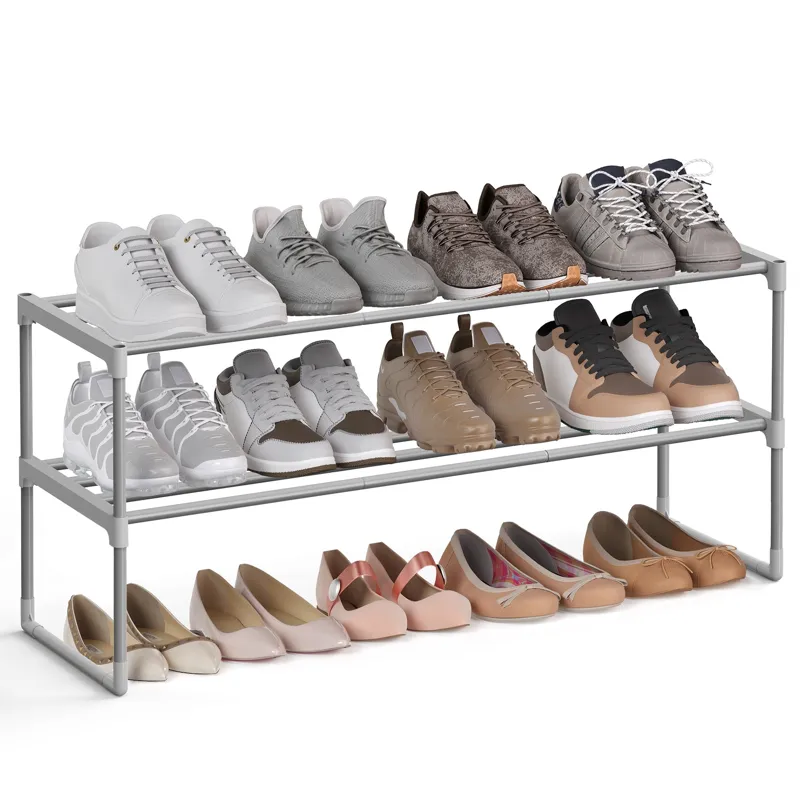
Shoe Rack, 2-Tier Shoe Organizer, Metal Storage Shelf
Check how your footwear fits the usable shelf or compartment dimensions.
Read the existing model research →References & research notes
These references inform the decision process. Numerical examples are illustrative unless explicitly attributed; they are not specifications for the linked products. Product links are examples to investigate, not confirmation that they fit your space. Verify the exact model and its current manufacturer instructions before ordering.
Created with AI assistance and reviewed for internal consistency, source relevance and links. We have not physically tested the featured products. Affiliate disclosure.