Measure a complete pair
Set the largest pair in its natural storage orientation and record the outer dimensions. The printed shoe size is a useful identifier, but the actual footwear shape varies across styles and does not substitute for measurement.
Read interior information
Look for internal depth, pocket dimensions and any stated footwear compatibility on the exact product page or instructions. If information is missing, seek clarification rather than subtracting an assumed panel thickness from the cabinet’s outside dimensions.
Consider alternate orientation
Some designs describe different divider positions or permitted shoe orientations. Compare only the configurations the maker documents, and note how each changes capacity, visibility and how easily you can take the pair out together.
Test the closing movement
A pair can fit inside an open pocket and still obstruct the closing arc. If inspecting in person is possible, bring measurements or a representative shoe and compare the full movement. Otherwise prioritize a documented fit or a return policy that accommodates your uncertainty.
A cabinet designed around low-profile footwear may not suit a long, bulky athletic shoe even when its nominal pair count seems generous for your collection.
Continue your research.
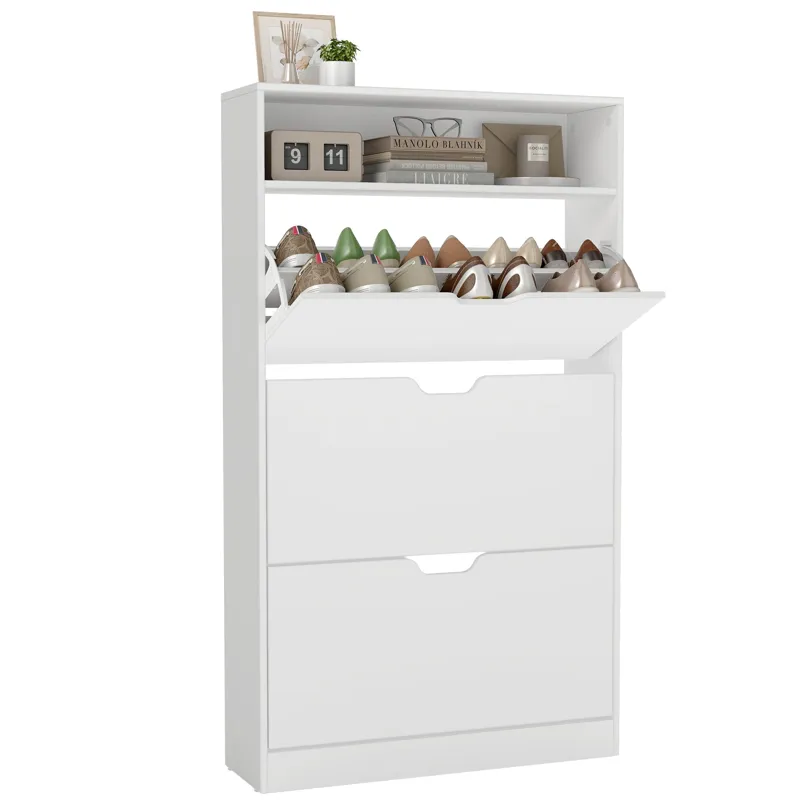
Custos Collection - Shoe Cabinet
Check how your footwear fits the usable shelf or compartment dimensions.
Read the existing model research →References & research notes
These references inform the decision process. Numerical examples are illustrative unless explicitly attributed; they are not specifications for the linked products. Product links are examples to investigate, not confirmation that they fit your space. Verify the exact model and its current manufacturer instructions before ordering.
Created with AI assistance and reviewed for internal consistency, source relevance and links. We have not physically tested the featured products. Affiliate disclosure.