Assign the upper levels
Decide which pairs would occupy the highest positions and how often you use them. A tower offers less practical daily capacity if several shelves are inconvenient for the person who needs those shoes.
Map the distributed option
Draw both low racks in the actual room, including any furniture they would displace. Two short units may preserve a window or useful wall area, but their combined width can also consume space needed for another task.
Check the manufacturer’s requirements
Read installation, assembly and placement directions for each exact model. Tall furniture can come with specific setup requirements; include those in the comparison instead of evaluating only its advertised storage count and exterior dimensions.
Compare identification
Stand where you normally choose footwear and consider what you can see. A tall narrow collection can be readable from one spot, while separate low units may group shoes by person or purpose more clearly. Choose the layout that matches your selection routine.
A narrow tower might suit occasional footwear above and daily pairs below, while two low racks could give two people independent access without sharing one vertical column.
Continue your research.
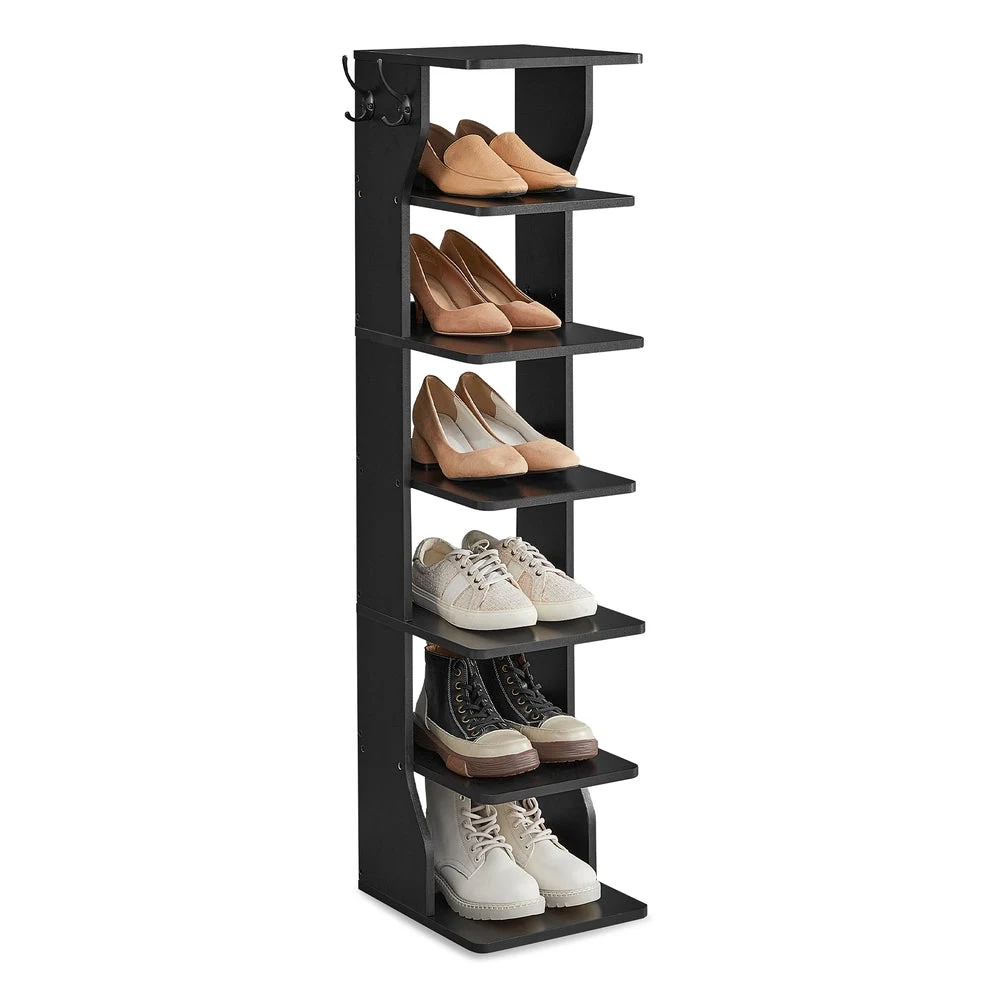
Slim Shoe Storage Rack
Create a defined place for footwear near an entrance or closet.
Read the existing model research →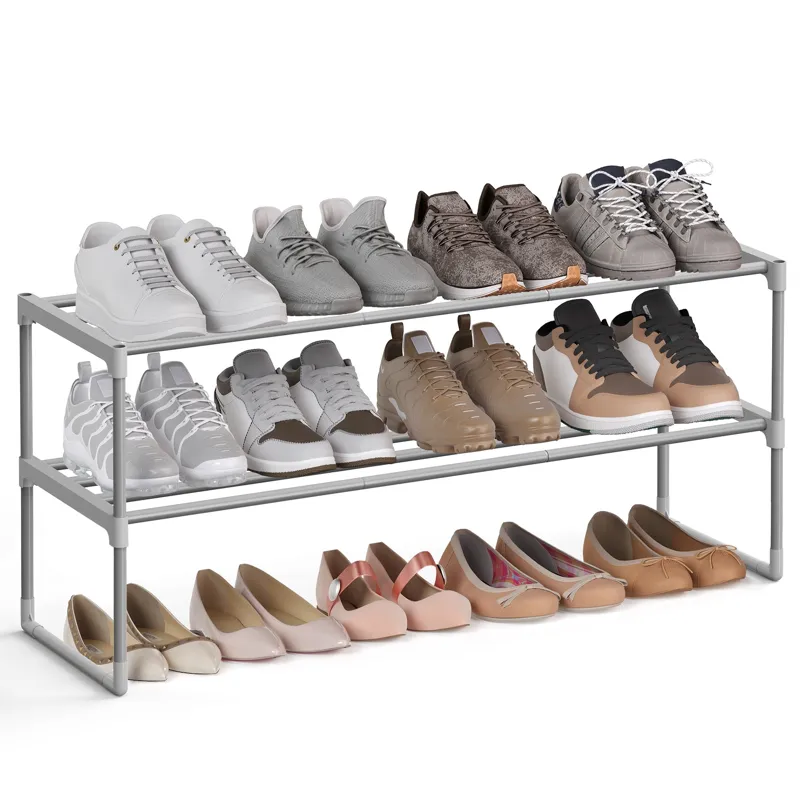
Shoe Rack, 2-Tier Shoe Organizer, Metal Storage Shelf
Check how your footwear fits the usable shelf or compartment dimensions.
Read the existing model research →References & research notes
These references inform the decision process. Numerical examples are illustrative unless explicitly attributed; they are not specifications for the linked products. Product links are examples to investigate, not confirmation that they fit your space. Verify the exact model and its current manufacturer instructions before ordering.
Created with AI assistance and reviewed for internal consistency, source relevance and links. We have not physically tested the featured products. Affiliate disclosure.