Empty the proposed rail segment
Move the clothes from the section the organizer would occupy. Decide where each garment would go permanently. Temporarily pushing everything to one side can hide the fact that the new folded storage displaced useful hanging space.
Use the folded dimensions
Fold the items you intend to store and compare them with the organizer’s internal shelf openings. Bulky sweaters may need more height than shirts; a photograph of neat equal piles does not establish that your assortment fits.
Check the bottom clearance
Measure below the fully extended organizer with shoes and baskets in their normal positions. A unit that hangs into floor storage can make both layers inconvenient, especially when you need to remove an item from the lowest shelf.
Compare a shelf alternative
If the rod is already full, an existing upper shelf with removable bins may preserve more useful capacity. The choice should reflect whether your shortage is folded storage, accessible daily storage or hanging space, rather than adding organization indiscriminately.
For example, replacing the rail occupied by seldom-worn jackets with folded work shirts could be useful; displacing your daily shirts to gain those same shelves may not be.
Continue your research.
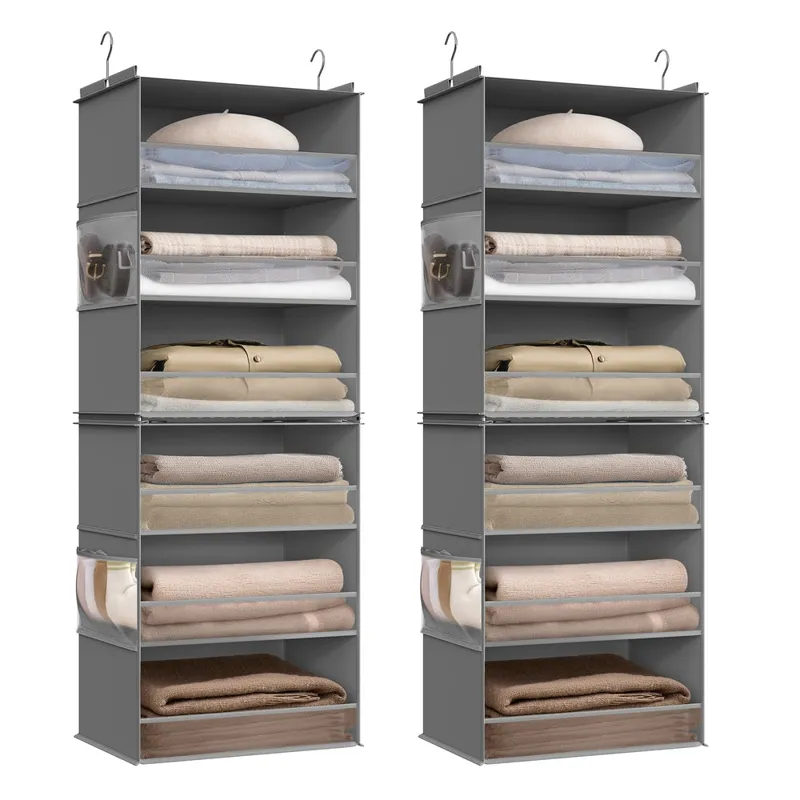
Hanging Closet Organizers
Compare hanging and shelf space with the clothes or coats you intend to organize.
Read the existing model research →References & research notes
These references inform the decision process. Numerical examples are illustrative unless explicitly attributed; they are not specifications for the linked products. Product links are examples to investigate, not confirmation that they fit your space. Verify the exact model and its current manufacturer instructions before ordering.
Created with AI assistance and reviewed for internal consistency, source relevance and links. We have not physically tested the featured products. Affiliate disclosure.