Try bags in their storage shape
Empty the bags as you normally store them and note whether they stand, fold or spread. A soft tote and a structured handbag can need different shelf dimensions even if their advertised widths sound similar.
Control loose straps
Arrange straps so they remain with their own bag and do not cross neighboring openings. This is a retrieval consideration, not a reason to compress a bag contrary to its maker’s care guidance.
Count displaced clothing
Remove the hanging garments from the rail segment the organizer will occupy. Decide whether the bag access gained is worth moving those garments to another useful location rather than crowding them into the remaining space.
Keep daily bags direct
Put frequently used bags in openings you can reach without lifting another item. Occasional bags can use less convenient positions if you can still identify them and remove them without emptying the entire organizer. Check whether shelf edges press against the bags when they rest inside. A compartment can be wide enough yet too shallow for the shape you want to maintain.
A small tote collection may suit open hanging shelves, while one large structured work bag could be better on an existing shelf with enough clearance above it.
Continue your research.
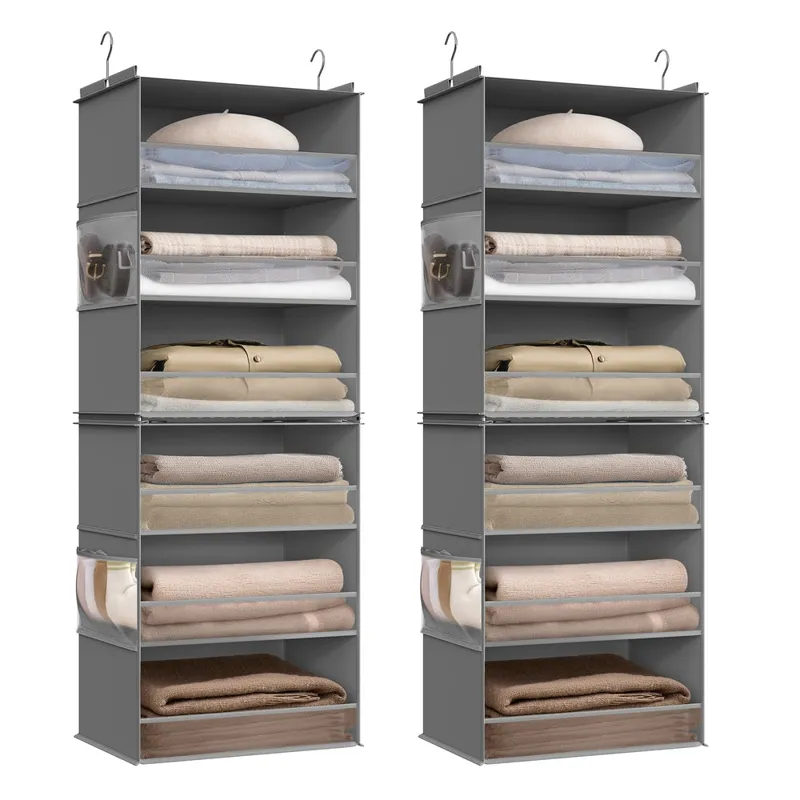
Hanging Closet Organizers
Compare hanging and shelf space with the clothes or coats you intend to organize.
Read the existing model research →References & research notes
These references inform the decision process. Numerical examples are illustrative unless explicitly attributed; they are not specifications for the linked products. Product links are examples to investigate, not confirmation that they fit your space. Verify the exact model and its current manufacturer instructions before ordering.
Created with AI assistance and reviewed for internal consistency, source relevance and links. We have not physically tested the featured products. Affiliate disclosure.