Compare garment shapes
Look at the shoulders, straps and waistbands in your wardrobe. Check garment care guidance when needed. A broad jacket and a narrow-strapped top may not benefit from identical hanger geometry.
Measure a complete hanging row
Use several garments on the proposed hanger type if you can inspect it in person. The fabric bulk still occupies space, so thin hangers alone do not guarantee a particular increase in closet capacity.
Keep specialty needs limited
Identify genuine exceptions rather than buying accessories for every hypothetical outfit. A small number of appropriate specialty hangers can coexist with a consistent main row without making the closet complicated.
Plan the empty hangers
Give unused hangers a short designated section so they do not interrupt garment selection. Before ordering a large pack, count the number needed after editing the wardrobe and keeping any existing hangers that already work well. Keep one small sample group on your existing hangers during the comparison. That makes it easier to judge a proposed change against something familiar rather than an idealized empty rail.
For example, a consistent row for ordinary shirts can coexist with a different hanger for a structured jacket; visual uniformity need not decide every clothing-storage choice.
Continue your research.
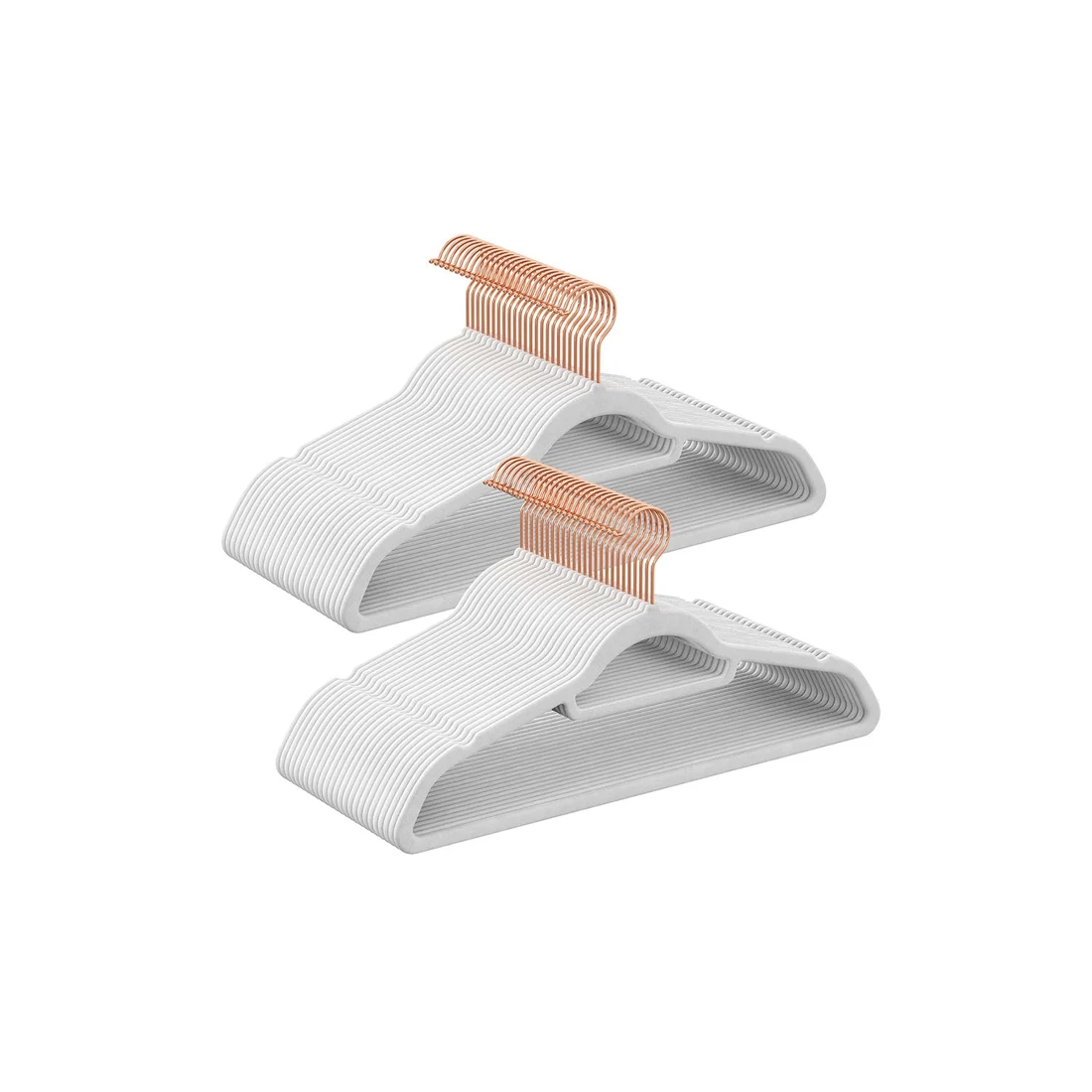
Velvet Hangers with Swivel Hook
Use a consistent hanger format to organize a closet rail.
Read the existing model research →References & research notes
These references inform the decision process. Numerical examples are illustrative unless explicitly attributed; they are not specifications for the linked products. Product links are examples to investigate, not confirmation that they fit your space. Verify the exact model and its current manufacturer instructions before ordering.
Created with AI assistance and reviewed for internal consistency, source relevance and links. We have not physically tested the featured products. Affiliate disclosure.