Count normal place settings
Put the daily diners on a sketch before assigning guest positions. A table against the wall may serve one or two people comfortably while sacrificing a side you rarely use. The choice should reflect real occupancy rather than an insistence on keeping every possible seat available.
Check the table’s supports
The available ends or exposed side still need usable legroom and chair access. A table designed around symmetric seating may not work equally well in the wall arrangement. Verify the actual base rather than assuming all rectangular tops can be used from any edge.
Plan the pulled-out position
Mark where the table moves for company and what else must change. Include chair backs and the walking route, not merely the larger gap behind the top. If moving the table requires displacing a sofa with no destination, the hosting mode may be unrealistic.
Keep the wall edge purposeful
Objects placed along the inaccessible edge can turn a dining surface into permanent storage. Decide which items belong there and which should live elsewhere. A table saved from daily clutter is easier to move and expand when visitors arrive.
For example, a table could serve two daily diners from one end and the open side, then pull out for four. The buyer tests the end-seat legroom and the expanded arrangement before relying on that flexibility.
Continue your research.
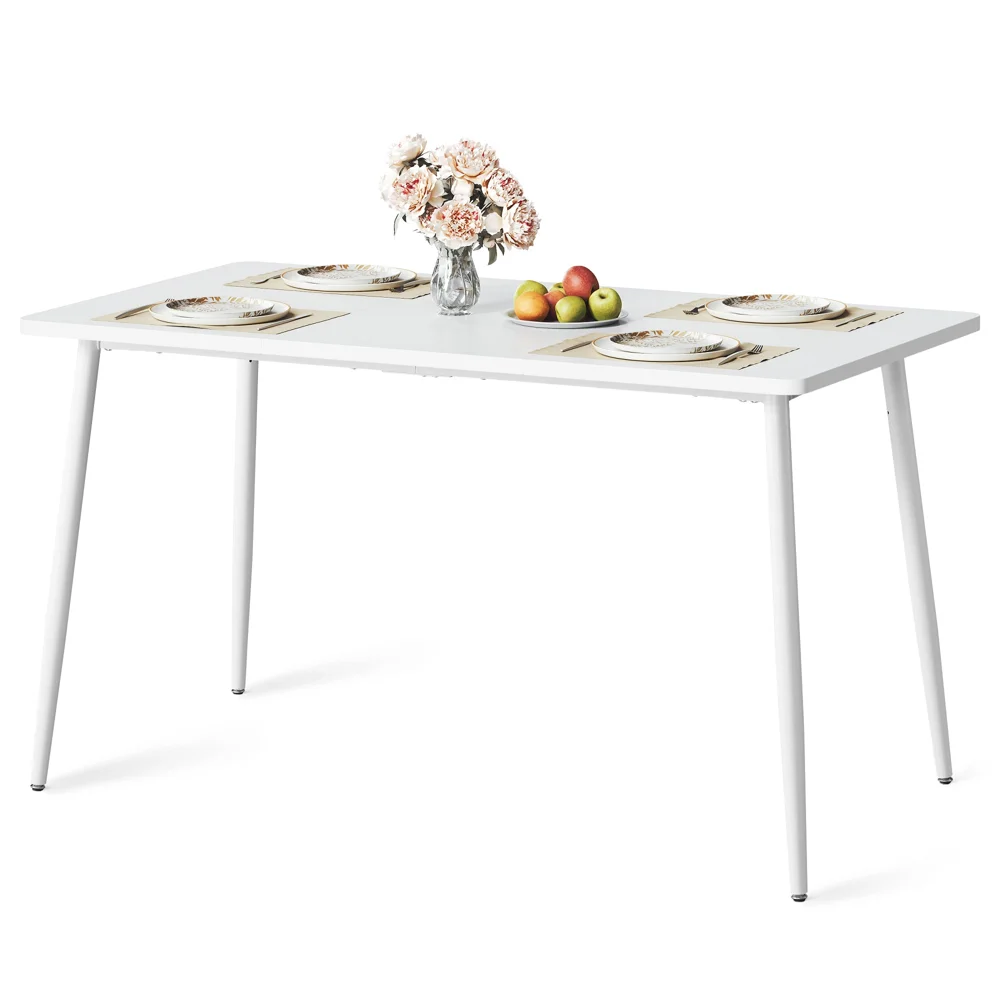
55.1 in Dining Table for 4-6 People, Modern Kitchen Table
Explore a dining surface that suits your room and seating.
Read the existing model research →References & research notes
These references inform the decision process. Numerical examples are illustrative unless explicitly attributed; they are not specifications for the linked products. Product links are examples to investigate, not confirmation that they fit your space. Verify the exact model and its current manufacturer instructions before ordering.
Created with AI assistance and reviewed for internal consistency, source relevance and links. We have not physically tested the featured products. Affiliate disclosure.